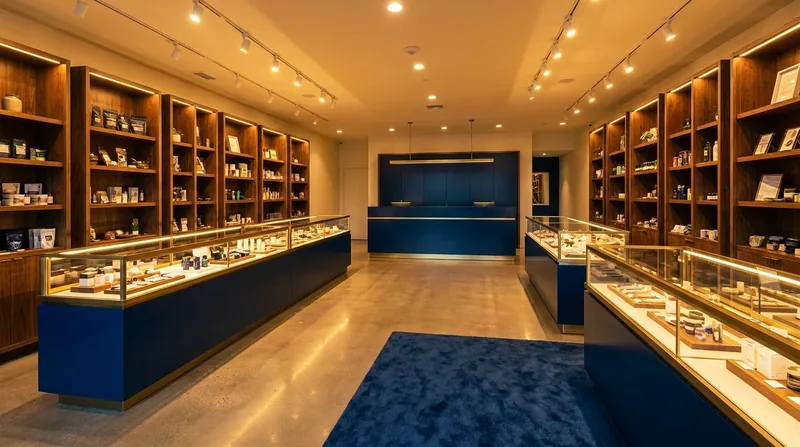
How to Open a Liquor Store in Wisconsin: Class A Licenses
How to Open a Liquor Store in Wisconsin: Class A Licenses
If you want to open a liquor store in Wisconsin, the license you need most is a municipal Class A liquor license. It allows you to sell intoxicating liquor in original, sealed packages for consumption off the premises. The city, village or town where the store will operate issues it, not the state. That single fact shapes almost every step in this process, so it makes sense to start there.
This guide covers the sequence that tends to work in practice: confirm the local rules, form your business entity, register for taxes, secure a location, apply to the municipal clerk, and then add any related Class A beer, tobacco and food permits you need. Figures below are current as of October 2026. Local ordinances vary, so confirm each number with the agency or office named before you budget around it.
Disclaimer: This article is informational content, not legal or tax advice. Liquor licensing, business entity choice and tax treatment depend on your specific facts and your municipality. Talk with a qualified Wisconsin attorney and a CPA before you sign a lease, buy inventory or file formation documents.
What a Class A Liquor License Covers
A Class A liquor license is the municipal license that lets a retailer sell packaged liquor for off-premises consumption. Under Wisconsin law, the municipality sets the annual fee, which falls in a range of $50 to $500 under s. 125.51. The fee is set locally, so the exact amount is whatever your municipality charges. Ask the clerk for the current figure in writing.
Class A liquor and Class A beer are separate licenses. A store that sells packaged beer for off-premises consumption needs its own Class A beer license in addition to the liquor license. Both are issued locally.
Two points about quotas matter a great deal for a store. First, Class A licenses have no state quota. Second, a municipality may set its own quota by ordinance. If your city caps the number of licenses it will issue, you may find that no license is available in your area even when you meet every other requirement. Finding out early saves you from signing a lease you cannot use.
Wisconsin does not issue a general business license at the state or county level, and most cities do not require one either. A few municipalities do, so check your city's requirements. In most places, your store will need three things: an entity registered with the Department of Financial Institutions (DFI), a seller's permit from the Department of Revenue (DOR), and activity-specific licenses such as the Class A liquor license issued by your municipal clerk.
Materials and Information You Need Before You Apply
Gather these items before you contact the clerk's office. Having them ready keeps the process moving and prevents the most common delays.
- A business name that you have checked against DFI records, with "LLC" or another required designation if you form an LLC
- Your chosen entity's formation documents, either Articles of Organization (Form 502) for an LLC or Articles of Incorporation (Form 2) for a for-profit corporation
- A registered agent with a physical street address in Wisconsin, a business office that matches the registered office, and an email address, since DFI sends annual report notices to the agent
- A signed lease or purchase agreement for the premises, ideally with a clause that makes the lease contingent on license approval
- A confirmation from the local zoning or planning office that retail liquor sales are allowed at the address
- A floor plan of the store showing the sales area and storage
- Identification and background information for each owner and manager, using the exact list your clerk provides
- A Wisconsin seller's permit, obtained through DOR before you begin selling
- A budget that includes the license fee, the entity filing costs, and the cost of initial inventory
Step-by-Step: Opening a Wisconsin Liquor Store With a Class A License
Step 1: Ask the Municipal Clerk About Quotas and Zoning
Start with a phone call or visit to the municipal clerk's office, then follow up in writing. Ask four questions. Does the municipality currently issue Class A liquor licenses? Is there a quota ordinance that limits the number of licenses? Are there any spacing or distance restrictions from schools, churches or other licensed premises? And what is the current annual fee for a Class A liquor license?
Then ask the planning or zoning office whether a liquor store is a permitted use at the address you are considering. A liquor license is tied to a specific premises, so a great location that fails zoning or quota review is a poor use of your startup money. Do this before you negotiate a lease.
Step 2: Choose and Form Your Business Entity
Wisconsin business entities are filed with the Department of Financial Institutions, Division of Corporate and Consumer Services, not with the Secretary of State. Most small liquor retailers form either an LLC or a for-profit corporation.
An LLC filing costs $130. You file Articles of Organization, Limited Liability Company (Form 502) under sec. 183.0201 of the Wisconsin Statutes. The name must contain "limited liability company" or "limited company," or an abbreviation such as "LLC" or "LC." Before you file, you can reserve a name for 120 days for $15 using Form CORP1. A preliminary name check is available in the DFI corporate records database at https://apps.dfi.wi.gov/apps/corpsearch/Search.aspx, but availability is only final once DFI files your document.
A corporation filing costs $100. You file Articles of Incorporation, Stock, For-Profit Corporation (Form 2) under ch. 180 of the Wisconsin Statutes. Corporations pay the 7.9% state corporate income tax, plus an economic development surcharge if gross receipts from all activities are $4 million or more. An LLC is generally treated as a partnership or disregarded entity by default, which means profits flow through to the owners' personal Wisconsin income tax returns. Wisconsin does not impose a separate LLC franchise or privilege tax. Which structure fits you depends on your ownership, financing and tax picture, so this is a good question for a CPA.
You must maintain a registered agent with a physical Wisconsin street address for the life of the entity. A P.O. box, mailbox service or telephone answering service does not qualify. The entity cannot serve as its own registered agent. Online filing is available through the DFI Business Entity File Online portal at https://dfi.wi.gov/Pages/BusinessServices/BusinessEntities/FileOnline.aspx. Online filings are in most cases accepted upon receipt, and DFI's statutory limit for processing new business filings is 5 business days.
Step 3: Register for State Taxes and Get Your Seller's Permit
Any seller of taxable products must hold a seller's permit, obtained through the Department of Revenue's Business Tax Registration. The initial permit costs $20 for a two-year period and renews for $10 every two years. Wisconsin's state sales tax rate is 5%. Confirm with DOR how each product category in your store is taxed before you set your prices.
You can register directly through the Department of Revenue at https://www.revenue.wi.gov/Pages/Businesses/New-Business-home.aspx or through the Wisconsin One Stop Business Portal at onestop.wi.gov. One Stop registers a new business with DFI, the Department of Revenue and the Department of Workforce Development in one pass, which saves time if you are starting from scratch.
Step 4: Secure the Premises With the Right Lease Terms
The lease is often the biggest financial commitment in the process, and it is the step where new owners most often get ahead of the approvals. Make the lease contingent on three things: the municipal Class A liquor license being approved, any required zoning approval, and the seller's permit being issued. Ask the landlord to confirm in writing that the property can be used for packaged liquor sales. A lease that carries no contingency can leave you paying rent on a store you cannot open.
Step 5: File the Municipal Class A Liquor License Application
Submit your application to the municipal clerk using the packet the clerk provides. The annual fee for a municipal Class A liquor license falls in a range of $50 to $500, as set by the municipality under s. 125.51. Expect background information requirements for owners and managers. The clerk can tell you the exact forms, who must sign them, and whether an operator credential is required for the person who runs the counter.
In most municipalities, the application goes before the council or a licensing committee for approval, sometimes at a public hearing. Ask the clerk for the meeting calendar and the typical lead time between submission and action. Do not assume a timeline. Confirm it with the clerk, and build a schedule with some slack in it.
Step 6: Add a Class A Beer License if You Sell Packaged Beer
If you plan to sell beer for off-premises consumption, apply for a Class A beer license through the same municipal clerk. It is a separate license with its own fee, so ask the clerk for the current amount. Many stores hold both licenses, and your application packet may combine them, but each license still needs to be approved and paid for on its own terms.
Step 7: Add a Municipal Tobacco License if You Sell Tobacco
Many liquor stores also sell tobacco, cigars or vaping products. If you do, you need a municipal tobacco license in addition to your liquor license. Confirm the fee and any age-verification or display requirements with your municipal clerk, since local rules can add conditions beyond the base license.
Step 8: Obtain a Retail Food License if You Sell Packaged Food
If your store sells packaged food, such as snacks, mixers, ice or prepared items, you need a retail food license. In Wisconsin, the local health department acts as the agent of the Department of Agriculture, Trade and Consumer Protection (DATCP) for this purpose. Contact your local health department to confirm the fee, the inspection process and whether your product mix requires the license. Stores that sell only sealed, non-food items may not need one, so ask before you assume either way.
Step 9: Check Local Signage, Building and Occupancy Rules
A license does not cover the physical build-out of your store. Confirm with your city or village whether you need a sign permit for exterior signage, a building permit for interior work, or an occupancy inspection before you open. Cities and counties add their own zoning and licensing requirements, so the planning office and building department are as important as the clerk's office.
Step 10: Open, Renew and Keep Records
Once your licenses are approved, put renewal dates on a calendar. The Class A liquor and beer licenses renew through the municipal clerk, so confirm the renewal schedule and deadline with that office. Your LLC or corporation must file an annual report each year after the year of organization. The LLC annual report is a $25 fee, due in the calendar quarter that contains your organization anniversary, and a paper filing adds a $15 surcharge for $40 total. Your seller's permit renews every two years at $10. Keep copies of every filing, receipt and approval in one folder.
Expected Results
A properly prepared application may help you move through the process in a predictable way. Once licensed, the store may be positioned to sell packaged liquor for off-premises consumption, and, if you added them, packaged beer, tobacco and food. Results depend on the municipality's quota status, its approval calendar and the quality of your application, so none of these outcomes is guaranteed. Think of the license as the permission to open, not a forecast of how the store will perform.
Expect the most time to go into the municipal approval step and the lease negotiation, not the state filings. The DFI and DOR steps are typically the fastest part of the process once your documents are ready.
Costs at a Glance
Where a fee is set locally, confirm it with the agency named before budgeting.
| Item | Amount | Where to confirm |
|---|---|---|
| LLC formation (Form 502) | $130 | DFI |
| Corporation formation (Form 2) | $100 | DFI |
| Name reservation (120 days) | $15 | DFI |
| LLC annual report | $25 online, $40 by mail | DFI |
| Seller's permit | $20 for two years, $10 to renew | Department of Revenue |
| Municipal Class A liquor license | $50 to $500 per year, set by the municipality | Municipal clerk |
| Class A beer license | Set locally | Municipal clerk |
| Municipal tobacco license | Set locally | Municipal clerk |
| Retail food license | Set locally | Local health department |
Common Mistakes to Avoid
- Signing a lease before checking quota and zoning. A municipal quota or a zoning restriction can block the license entirely. Check both first.
- Assuming a state liquor license exists. The Class A liquor license is municipal. Your application goes to the local clerk, and the local council or committee decides it.
- Forming the entity with a name that DFI will not accept. Check the name in the DFI database and reserve it if you need time.
- Using a P.O. box as the registered office. The registered office must be a physical street location in Wisconsin, and the registered agent's business office must match it.
- Missing the annual report. The LLC or corporation annual report is required every year, and it is due in the quarter that contains your anniversary of organization.
- Forgetting the add-on licenses. Packaged beer, tobacco and food each carry their own requirements. Ask about each one at the start so you are not surprised after you open.
- Treating this article as the final word. Municipal rules, fees and deadlines differ across Wisconsin, and the figures here should be verified with the agency named before you rely on them.
Where to Get Help
The Wisconsin Small Business Development Center Network, operated through the Universities of Wisconsin, offers free and low-cost advising for new businesses at https://wisconsinsbdc.org/. The U.S. Small Business Administration also lists Wisconsin resources at https://www.sba.gov/district/wisconsin. For the liquor license itself, your municipal clerk is the authority that matters most. For entity questions, the DFI business entity pages at https://dfi.wi.gov/Pages/BusinessServices/BusinessEntities/GeneralInformation.aspx are the official source.
For complex situations, such as buying an existing license, co-owning with investors, or structuring the business for tax purposes, consult a qualified Wisconsin attorney and a CPA. A few hours of professional review before you sign a lease or a purchase agreement can prevent costly corrections later.
Final Checklist
- Confirm with the clerk that a Class A liquor license is available, and check any quota ordinance.
- Confirm zoning for retail liquor sales at the address.
- Reserve your name if needed, then file your LLC or corporation with DFI.
- Appoint a registered agent with a Wisconsin physical address and an email address.
- Obtain your seller's permit through the Department of Revenue.
- Sign a lease with license and permit contingencies.
- File the municipal Class A liquor application and any Class A beer, tobacco and food applications.
- Calendar your DFI annual report, seller's permit renewal and municipal license renewals.
Keep exploring: related Wisconsin guides
- How to Open a CBD or Hemp Store in Wisconsin Before the 2026 Federal THC Cap
- How to Open a Pawn Shop or Secondhand Store in Wisconsin
- How to Get a Wisconsin Dealer License and Start a Car Dealership
- How to Open a Vape or Smoke Shop in Wisconsin
- How to Start an LLC in Wisconsin
- Wisconsin Business License
- How Much Does It Cost to Start a Business in Wisconsin
- All Wisconsin business types
- Every Wisconsin guide in one place