How to Start a Farm Business in Wisconsin: Agritourism, Farm Stands and Licenses
How to Start a Farm Business in Wisconsin: Agritourism, Farm Stands and Licenses
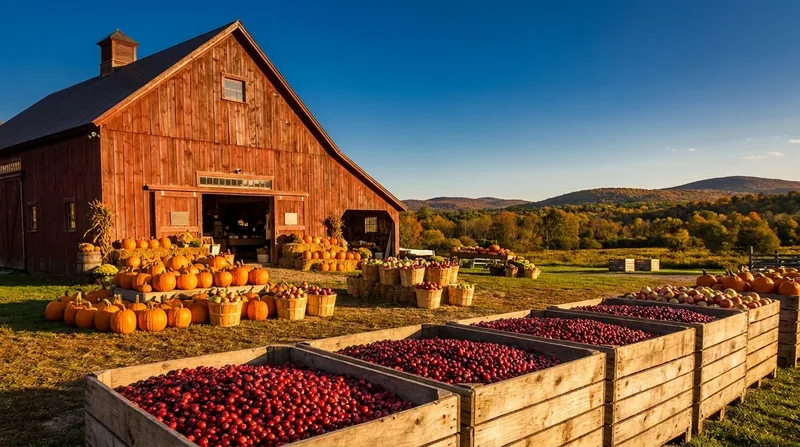
Wisconsin farms run on a wide mix of enterprises: dairy, cranberries, Christmas trees, nursery stock, produce sold from a roadside stand, and u-pick fields that draw families out in the fall. Starting one is less about a single license than about a sequence. You register the business, register for taxes, then get the license tied to each product or activity you offer. This guide walks through that sequence in the order most farmers should follow it.
Informational note: This article is general information, not legal or tax advice. Rules, fees and thresholds change, and your town, county and product mix can change what applies to you. Confirm each requirement with the agency named, and talk with a qualified attorney or CPA before you form an entity, sign a lease or hire employees.
What You Need Before You Start
Gather these materials before you file anything. Most of the early work is paperwork, and it moves faster when the facts are settled.
- A proposed business name, checked against the DFI business records search at apps.dfi.wi.gov. A preliminary check is not final until DFI files your document.
- A product list: every crop, animal product, tree, nursery item or activity you plan to offer, including hayrides, u-pick, tours or events.
- Projected annual sales for each product, so you can test them against the $250 thresholds for Christmas trees and nursery stock.
- A map and street address for each parcel, including rented ground.
- A Wisconsin registered agent with a physical office address and an email address, required for an LLC or corporation.
- A monthly headcount of employees, including seasonal and part-time help.
- A federal Employer Identification Number (EIN) from the IRS, which you will need for payroll and most entity filings, and a business bank account in the business name.
- A filing budget. The table below covers the state fees in this guide.
Filing Fees at a Glance
| Item | Agency | Cost | Notes |
|---|---|---|---|
| LLC Articles of Organization (Form 502) | DFI | $130 online, $170 paper | Filing fee |
| LLC annual report (Form 5) | DFI | $25 online, $40 by mail | Due each year in the quarter containing the anniversary of organization |
| Corporation Articles of Incorporation (Form 2) | DFI | $100 | Filing fee |
| Corporation annual report (Form 17) | DFI | $25 online, $40 by mail | Due each year in the quarter containing the anniversary of incorporation |
| Name reservation | DFI | $15 | Holds the name for 120 days |
| Trade name (DBA) | DFI | $15 | Optional; renewal is $15 |
| Seller's Permit | DOR | $20 for the initial two years, $10 each two years after | Required for any seller of taxable products or services |
| Milk producer license (s. 97.22) | DATCP, usually through your dairy plant | Confirm with DATCP | Required per dairy farm |
| Christmas tree grower license | DATCP | Confirm with DATCP | Required above $250 a year in tree sales |
| Nursery license | DATCP | Confirm with DATCP | Required above $250 a year in nursery stock sales |
Step 1: Map Your Product Lines Against the Thresholds
Start by writing down every product and activity with its projected annual sales. Wisconsin attaches two specific licenses to dollar thresholds. A DATCP Christmas tree grower license applies when you grow and sell more than $250 of trees a year. A nursery license applies to nursery stock sales over $250 a year. Growers under the Christmas tree threshold file a License Not Required form instead. Confirm with DATCP where and how to file it.
Mixed farms are normal. A dairy operation with a farm stand, or a cranberry marsh with a fall u-pick, has more than one set of rules. Check each line separately rather than assuming the largest one covers the rest.
Wisconsin issues no single general statewide business license, and most cities do not license general businesses either. A few do, so ask your municipal clerk. Cities and counties can still regulate zoning, signage and events, so local rules are part of the plan even when no business license applies.
Step 2: Choose a Structure and Register With DFI
Wisconsin business entities are filed with the Department of Financial Institutions (DFI), Division of Corporate and Consumer Services, not a Secretary of State. A sole proprietorship that operates under the owner's own name needs no DFI filing. Many farms form a limited liability company (LLC) to separate personal and business liability, but the right structure depends on your situation and is a question for your attorney and CPA.
For an LLC, file Articles of Organization, Limited Liability Company (Form 502), under sec. 183.0201, Wis. Stats. The filing fee is $130 online or $170 on paper. The name must contain 'limited liability company' or 'limited company', or the abbreviation LLC or LC, and it must be distinguishable from other registered names under s. 183.0112. If you need time to finalize the name, you can reserve it for 120 days for $15 using DFI's CORP1 form. Online filings are in most cases accepted on receipt. DFI's statutory limit for processing new business filings is five business days. Expedited service costs an extra $100 and is acted upon by the close of business on the first business day after receipt.
A corporation is filed with Articles of Incorporation, Stock, For-Profit Corporation (Form 2), under ch. 180, Wis. Stats., for a $100 filing fee. The tax treatment differs. A corporation pays the 7.9% corporate franchise or income tax. An LLC is treated by default as a partnership (multi-member) or a disregarded entity (single-member), so profits flow through to the owners' individual income tax at graduated rates of 3.50% to 7.65%. An LLC can elect corporate treatment. Wisconsin imposes no separate LLC franchise or privilege tax, so the $25 annual report is the only recurring state entity charge for an LLC.
Every LLC and corporation must keep a registered agent with a physical Wisconsin street address. A P.O. box, mailbox service or telephone answering service does not qualify. The agent's email address goes on the formation document and every annual report, because DFI sends official notices there. The entity cannot be its own registered agent. A change of agent or office costs $10 online or $25 on paper.
If you operate under a farm name such as a trade name, you can register it with DFI's Trademarks and Trade Names Bureau for $15 per name. Registration is optional, because you can use a trade name without it. Sole proprietorships and partnerships can also record a firm name with the county register of deeds under Wis. Stat. 134.17, at a fee the county sets.
Step 3: Register for Taxes With the Seller's Permit
Any seller of taxable products or services must hold a Seller's Permit from the Wisconsin Department of Revenue (DOR). The permit costs $20 for the initial two-year period and $10 to renew each two years after that. Apply through DOR's Business Tax Registration at tap.revenue.wi.gov/BTR. The state sales tax rate is 5%. Taxability depends on what you sell and how, so ask DOR before you set farm stand prices rather than guessing.
For a new business, the fastest route is the Wisconsin One Stop Business Portal at onestop.wi.gov. It registers a new business with DFI, DOR and the Department of Workforce Development (DWD) in one pass. If you already have an entity on file, confirm which registrations you still need before you submit anything.
Step 4: Get the License for Each Commodity
Wisconsin ties licenses to the activity itself. The Department of Safety and Professional Services (DSPS), DATCP, or a local health department acting as DATCP's agent may handle yours, depending on what you do. Confirm the right agency for each product before you buy stock or plant ground.
Dairy
Wisconsin requires a milk producer license for each dairy farm under s. 97.22, Wis. Stats. In practice the license is usually handled through the dairy plant that receives your milk. Ask your plant what it needs from you before your first load ships. Confirm the license requirements, inspection expectations and any fees with DATCP. Do not assume the plant's paperwork covers your farm.
Christmas Trees
If you grow and sell more than $250 of Christmas trees a year, you need a DATCP Christmas tree grower license. Growers under that threshold file a License Not Required form. Keep annual sales records from your first year, because you will need them to show which side of the line you were on.
Nursery Stock
A nursery license applies when your nursery stock sales exceed $250 a year. Add up all nursery stock sales before you decide you are under the line, and confirm with DATCP exactly what counts toward the total.
Step 5: Set Up Your Farm Stand Correctly
Farm stand sales rules depend on what you sell, where it came from and whether it was prepared on site. Raw produce and farm products fall under different rules from processed or prepared food, and the difference affects licensing and inspection. Ask DATCP about your specific products, and check with your local health department before you sell anything that involves cutting, processing or preparing food.
Plan three things before opening day:
- Zoning and parking. Your town or county may regulate a roadside stand, its signage, parking and events. Check before you build a structure or post a sign.
- Sales tracking. Record sales by product so you can apply the correct tax treatment and keep the data you need for the $250 thresholds.
- Alcohol. If you plan to sell or serve alcohol at a farm event or tasting, that is handled through your municipal clerk.
Step 6: Plan Agritourism and U-Pick Liability
Wisconsin's agritourism liability limit under s. 895.524 (2013 Act 269) applies only if you post the statutory warning sign. If you skip the sign, you lose the limit. Get the exact sign wording and placement from the statute, and have your attorney confirm them before you open to visitors.
A liability limit does not replace insurance. Ask an agent for a quote that covers each activity you run, including hayrides, animal contact, u-pick operations and events. Ask how the policy handles injuries on rented ground, and whether your general liability limit fits your expected visitor count.
Step 7: Join the Cranberry Marketing Order If You Grow Cranberries
Wisconsin is the nation's leading cranberry state. It harvests about 60% of US cranberries in a typical year, according to USDA's Economic Research Service, and led the nation for a 31st year in 2025. Cranberry growers operate under the Wisconsin Cranberry Board marketing order. Before your first harvest sale, ask the Board about your obligations, including any assessments, reporting or marketing requirements. Confirm any amounts with the Board directly.
Step 8: Plan Workers' Comp and Payroll
Farm employers come under Wisconsin workers' compensation when they have 6 or more employees on 20 days in a calendar year. Count carefully. Seasonal crews, part-time workers and temporary harvest help can push you over the line faster than you expect. Before you bring in seasonal help, confirm with DWD how the count works and how family members and part-time staff are treated. Track headcount by day, not only by payroll total.
Step 9: Look at Tax Credits and Get Help
Wisconsin's Manufacturing and Agriculture Credit (MAC) is a state income tax credit that may apply to qualifying agricultural activity. Eligibility depends on your entity type, activities and income, so confirm it with DOR or a CPA before you build it into your budget.
Advisers are available if you want help with the plan. The Wisconsin Small Business Development Center Network, run through the Universities of Wisconsin, offers business advising at wisconsinsbdc.org. The SBA's Wisconsin district page at sba.gov/district/wisconsin lists federal resources for Wisconsin businesses.
Common Mistakes to Avoid
- Forgetting the annual report. An LLC's $25 report is due each year in the quarter that contains its organization anniversary. Missing it creates avoidable trouble with the state.
- Using a P.O. box as the registered office. Wisconsin requires a physical street address for the registered agent.
- Running agritourism without the sign. Without the statutory warning sign posted, you should not assume the liability limit applies.
- Counting only one sales channel. Check the $250 Christmas tree and nursery thresholds against total sales, and confirm with DATCP what counts.
- Assuming someone else covers your license. The dairy plant's paperwork may not cover your farm, and your city may require a license even if most Wisconsin cities do not.
- Mixing taxable and non-taxable sales. Track them separately from the first day of sales.
- Missing seasonal workers in the headcount. Harvest crews count toward the 6-employee test on the days they work.
What Results to Expect
A farm that completes these steps in order usually ends up with a clear file: an entity on record with DFI, a Seller's Permit, the commodity licenses that match its products, and a documented position on liability and workers' comp. That file can help you open on schedule and answer questions from an inspector or lender quickly. It does not guarantee profit or any particular sales result, and timing depends on the workloads at DFI, DOR and DATCP and on how complete your applications are.
Agritourism and u-pick operations that post the required sign, carry insurance and keep product-level sales records are often easier to run over time, because the records answer most questions before they come up. If you market produce or dairy with health claims, check labeling requirements with the FDA and DATCP before you publish them.
Next Steps
Start with Step 1 this week. List each product, estimate its sales and count your headcount. Then file the DFI paperwork and the Seller's Permit through One Stop, and call DATCP about your specific commodity license before you commit money to stock or ground.
Disclaimer: This is informational content, not legal or tax advice. Confirm every fee, threshold and deadline with the agency named, and consult a qualified attorney and CPA for your situation, especially before forming an entity, choosing a tax treatment or taking on employees.
Keep exploring: related Wisconsin guides
- How to Start a Dog Breeding or Pet Business in Wisconsin
- How to Grow and Sell Ginseng in Wisconsin
- How to Start a Deer Farm or Hunting Ranch in Wisconsin
- How to Start a Meat Processing or Deer Processing Business in Wisconsin
- How to Start an LLC in Wisconsin
- Wisconsin Business License
- How Much Does It Cost to Start a Business in Wisconsin
- All Wisconsin business types
- Every Wisconsin guide in one place