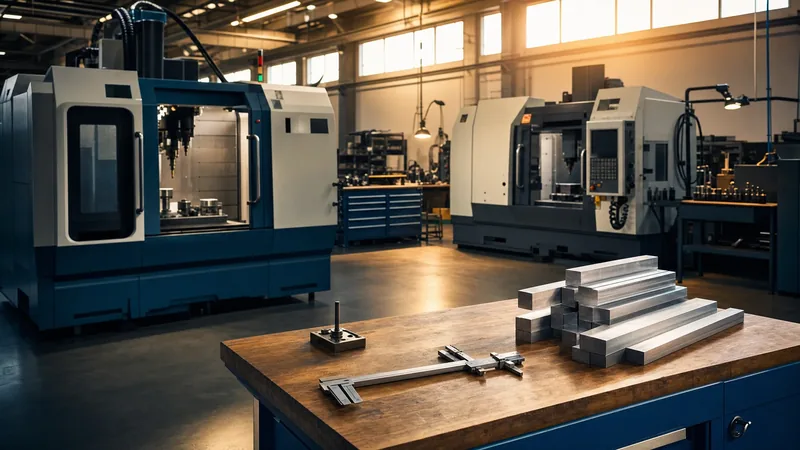
How to Start a Manufacturing or Machine Shop Business in Wisconsin
How to Start a Manufacturing or Machine Shop Business in Wisconsin
Wisconsin has one of the deepest manufacturing bases in the country. Manufacturing accounts for 16.1% of the state’s gross domestic product, fourth among states according to the U.S. Bureau of Economic Analysis (2025 data). That concentration creates steady demand for contract machining, fabrication, tooling and precision parts, but it also means you will compete with established Wisconsin manufacturing firms for the same customers. This guide walks through the steps to form a Wisconsin machine shop or small manufacturing company, from choosing a legal structure to registering with the state and understanding the tax rules that apply to manufacturers.
Informational only: This article is general information, not legal or tax advice. Entity choice, sales and property tax treatment, environmental permits and zoning depend on your specific facts. Talk with a Wisconsin attorney and a CPA before you file, sign a lease or commit to equipment purchases.
What You Need Before You Start
Gather these items before you file anything. Several of them take longer to get than the paperwork does.
- A written business plan that defines your niche (for example, precision CNC turning and milling, sheet metal fabrication, or tooling and dies), your target customers, an equipment list, a staffing plan and a 12-month cash flow projection.
- Startup capital for equipment, facility deposits, insurance, the state filing fee and several months of operating costs. Equipment prices vary widely by machine type, age and condition, so get written quotes rather than relying on estimates.
- A business name that meets Wisconsin naming rules, plus a backup name in case your first choice is taken.
- A registered agent with a physical street address in Wisconsin and an email address (covered in Step 4).
- A federal Employer Identification Number (EIN) from the IRS, which you can request directly from the agency at no charge.
- A property zoned for industrial or light manufacturing use, with a clear path to any required building occupancy approval.
- A business checking account, bookkeeping software and a filing system for exemption certificates and purchase records.
- Insurance quotes for general liability, property and workers’ compensation coverage.
- Contact information for an advisor at your regional Small Business Development Center.
Step-by-Step Guide to Starting a Wisconsin Machine Shop
Step 1: Pick Your Niche and Write the Plan
Machine shops that last usually start narrow. Choose the processes you can run well, such as turning and milling aluminum and steel for a specific industry, and then identify three to five customers who buy that work on a regular schedule. Ask them what they pay now, how often they reorder and what makes them change suppliers. A plan built on real quotes and real purchase history is far more persuasive to a lender or partner than a generic market summary. If you need a planning template or a second opinion, the Wisconsin Small Business Development Center network can help.
Step 2: Choose a Legal Structure
Most machine shops form either a limited liability company (LLC) or a corporation. An LLC is the more common choice for small shops because it separates your personal liability from business debts while keeping tax reporting relatively simple. Under Wisconsin’s default rules, a multi-member LLC is treated as a partnership and a single-member LLC as a disregarded entity. Profits then flow through to the owners’ personal Wisconsin income tax returns at graduated rates of 3.50% to 7.65%. An LLC can instead elect corporate tax treatment, in which case it pays the 7.9% corporate franchise or income tax.
A corporation pays the 7.9% corporate income tax, plus an economic development surcharge if its gross receipts from all activities are $4 million or more. Confirm which structure fits your revenue projections and ownership plans with a CPA, because the choice affects owner pay, how profits are taxed and how you bring in investors.
Step 3: Check and Reserve Your Name
An LLC name must contain “limited liability company,” “limited company,” or the abbreviation “LLC” or “LC.” Variations that differ only in capitalization or punctuation are acceptable. “Limited” may be abbreviated “Ltd.” and “company” may be abbreviated “Co.” The name must also be distinguishable on Department of Financial Institutions (DFI) records from other registered entities and from any reserved or registered name. Corporate naming rules differ in some details, so check them on the DFI site.
Search the DFI corporate records database at apps.dfi.wi.gov/apps/corpsearch/Search.aspx. Treat the search as a preliminary check only. Availability is final only once DFI examines and files your document. If you need to hold a name while you finish your paperwork, you can reserve it for 120 days for a $15 fee using Form CORP1 at dfi.wi.gov (CORP1 form).
Step 4: Name a Registered Agent and Office
Every Wisconsin LLC and corporation must continuously maintain a registered agent with a registered office in Wisconsin. The registered office address must match the agent’s business office and must be an actual physical street location. A P.O. box, mailbox service or telephone answering service does not qualify. The agent’s email address is required on your formation document and on every annual report, because DFI directs annual report forms and official notices to the agent. Your company cannot serve as its own registered agent.
If you change agents or move the registered office later, a statement of change costs $10 when filed online or $25 on paper. Many owners use a commercial registered agent service, but compare the costs and confirm that the provider meets the physical address requirement before you pay.
Step 5: File Formation Documents With DFI
For an LLC, file Articles of Organization, Limited Liability Company (Form 502) under section 183.0201 of the Wisconsin Statutes. For a corporation, file Articles of Incorporation, Stock, For-Profit Corporation (Form 2) under chapter 180. The filing fee is $130 online or $170 on paper for an LLC, and $100 for a corporation. File online through DFI’s Business Entity File Online portal at dfi.wi.gov (File Online).
Online filings are in most cases accepted on receipt with immediate notice. DFI’s statutory limit for processing new business filings is 5 business days. Paper filings are mailed to the Milwaukee lockbox and take longer. If you need faster handling, expedited service for an LLC costs $100 on top of the filing fee, whether you file online or on paper, and the document is acted upon by the close of business on the first business day after receipt. Documents delivered to the DFI customer service counter in Madison can be processed within four hours for $250 or within one hour for $500.
Step 6: Register for Taxes and Employment
Wisconsin issues no general business license at the state level, and most cities do not issue one either. The registration nearly every manufacturer needs is the seller’s permit from the Wisconsin Department of Revenue (DOR). Any seller of taxable products or services must hold one. The initial permit costs $20 for a two-year period, and renewal costs $10 every two years. Apply through DOR’s Business Tax Registration system at tap.revenue.wi.gov/BTR.
To register with DFI, DOR and the Department of Workforce Development (DWD) in a single pass, use the Wisconsin One Stop Business Portal at onestop.wi.gov. Before you hire, confirm your employer obligations, including income tax withholding, unemployment insurance and workers’ compensation, with DOR and DWD.
Step 7: Confirm Zoning, Building and Environmental Permits
The state does not issue a general business license, but your city, village, town or county will apply zoning and building requirements to your shop. Before you sign a lease, ask the local zoning office whether machining, welding or fabrication is a permitted use at that address, whether the building needs an occupancy approval and whether you can run the shifts you plan to operate. Some local governments add their own licensing requirements, so ask about those too.
Environmental rules are the item shops most often overlook. If your operation includes coatings, paint or other spraying, check with the Wisconsin Department of Natural Resources (DNR) whether you need an air permit before you install the equipment. Do not assume a small booth is exempt. Ask for the determination in writing so you have a record if an inspector asks later. Also ask the DNR about handling of cutting fluids, solvents and metal waste at your site.
Step 8: Set Up Sales Tax Exemptions for Machinery and Inputs
The Wisconsin state sales tax rate is 5%, but manufacturers receive important exemptions. Sales of manufacturing machinery and equipment, and of many inputs used in production, are generally exempt. The details matter. Exemptions apply only to qualifying items used in qualifying manufacturing activities, and the purchaser typically must give the seller an exemption certificate. Keep records that connect each exempt purchase to its production use.
Confirm with DOR which purchases qualify before you assume they are exempt. Cutting tools, cutting fluids and general shop consumables may or may not qualify depending on how they are used. A wrong assumption can leave you owing tax, interest and penalties on purchases you thought were exempt.
Step 9: Understand Manufacturing Property Tax Treatment
In Wisconsin, manufacturing property is assessed by the Department of Revenue rather than by your municipality. That differs from how most commercial property is valued by local assessors. Your land and buildings may be valued at the state level, but your property tax bill still comes from your local taxing jurisdictions. Wisconsin repealed the personal property tax beginning in 2024, so machinery and equipment are no longer taxed as personal property. Ask DOR how your property will be valued, how often the value is updated and what that means for your annual costs, and build those figures into your projections before you buy a building or major equipment.
Step 10: Research Incentives and Support Programs
Several programs can reduce your costs or help you finance equipment, but eligibility rules change and awards are never guaranteed. Start with these:
- Manufacturing and Agriculture Credit. A Wisconsin tax credit for qualifying manufacturers and farms. Confirm the current amount, eligibility rules and claim process with DOR before you count on it in your budget.
- Wisconsin Economic Development Corporation (WEDC). The state’s economic development agency runs programs that can include grants, loans and training support for manufacturers. Ask what is currently open and what your project would need to qualify.
- Regional manufacturing programs. Regional economic development groups and manufacturing support organizations run programs that vary by area. Ask your SBDC advisor which ones serve your county.
- Wisconsin Small Business Development Center network. Advising and planning support from the Universities of Wisconsin, available at wisconsinsbdc.org.
Step 11: Build Your Annual Compliance Calendar
An LLC must file an annual report with DFI every year after the year of organization, during the calendar quarter that contains the anniversary of organization. The Limited Liability Company Annual Report (Form 5) fee is $25. A paper filing adds a $15 surcharge, bringing a mailed filing to $40. Corporations file the Business Corporation Annual Report (Form 17) on the same quarterly schedule, with the same $25 fee and $40 by mail. Use the table below to find your due date.
| Organized between | Annual report due |
|---|---|
| Jan 1 to Mar 31 | March 31 |
| Apr 1 to Jun 30 | June 30 |
| Jul 1 to Sep 30 | September 30 |
| Oct 1 to Dec 31 | December 31 |
Set calendar reminders for these dates, and keep your registered agent’s contact details current, since DFI sends annual report forms to the agent. Confirm any late-filing consequences directly with DFI.
Tips for a Smoother Launch
- Get quotes in writing. Verbal estimates for machines, buildings and insurance change quickly. A written quote lets you compare options and protects your cash plan.
- Talk to your SBDC advisor early. An advisor can flag problems in your plan before a lender does.
- Build an exemption file. Store each exemption certificate and the production purpose behind it in one place. DOR reviews can go back several years.
- Ask potential customers about their supplier onboarding. Many buyers require certificates of insurance, quality documentation and a vendor registration before they place their first order. Find out what they need before you bid.
- Plan for cash flow. Equipment payments, rent and payroll often start before steady customer revenue does. Keep reserves for at least several months of fixed costs.
Common Mistakes to Avoid
- Assuming you need a state business license. Wisconsin’s core registrations are with DFI and DOR. Check local rules separately, rather than searching for a single statewide license.
- Signing a lease before confirming zoning. Find out whether your intended use and hours are allowed before you commit to rent.
- Using a P.O. box as the registered office. The registered office must be a physical street address in Wisconsin.
- Skipping the DNR air permit question. Coatings and painting operations can require an air permit. Ask before you install the booth.
- Treating every purchase as exempt. Confirm which items qualify with DOR, and document the production use of each one.
- Leaving the agent email out of your filings. The email is required on the formation document and on every annual report.
- Forgetting the annual report. Missing the quarterly deadline can put your company’s good standing at risk, so put the due date on your calendar as soon as you file.
Expected Results
Results depend on your niche, your local customer base, your equipment and how you manage the business. Completing the steps above is generally what allows a shop to operate legally, register for sales tax, buy qualifying items under exemption paperwork and invoice customers. It does not guarantee customer demand, pricing power or profit.
Many new shops find that the first several months go to quoting, qualifying with prospective customers and building a repeat base. Owners who document their processes early and confirm their tax and permit obligations before opening often report fewer surprises during their first year, though outcomes vary. Incentive programs may offset some costs for eligible projects, but there is no assurance that any specific program will be available or that your project will qualify.
Where to Get Help
- Wisconsin Small Business Development Center network: wisconsinsbdc.org
- U.S. Small Business Administration, Wisconsin district: sba.gov/district/wisconsin
- DFI business entities, general information: dfi.wi.gov (business entities)
- DFI corporate records search: apps.dfi.wi.gov corporate records search
- DOR new business resources: revenue.wi.gov (new businesses)
- Wisconsin One Stop Business Portal: onestop.wi.gov
Final Checklist
Before you open the doors, confirm that you have filed your formation document with DFI, named a compliant registered agent, obtained an EIN, registered for the seller’s permit, confirmed zoning and occupancy approval, checked DNR air permit requirements for any coating or painting, set up your exemption records and calendared your annual report. Confirm every fee and deadline on the agency page before you pay, because fees and processing rules can change.
Reminder: This article is informational, not legal or tax advice. For complex situations, such as multiple owners, outside investors, property purchases or environmental questions, consult a qualified Wisconsin attorney and a CPA.
Keep exploring: related Wisconsin guides
- How to Start a Handyman Business in Wisconsin
- How to Get Licensed and Start an HVAC Business in Wisconsin
- How to Start a Painting Business in Wisconsin
- How to Get a Wisconsin Electrical License and Start an Electrical Contracting Business
- Wisconsin Contractor License
- How to Start an LLC in Wisconsin
- Wisconsin Business License
- How Much Does It Cost to Start a Business in Wisconsin
- All Wisconsin business types
- Every Wisconsin guide in one place