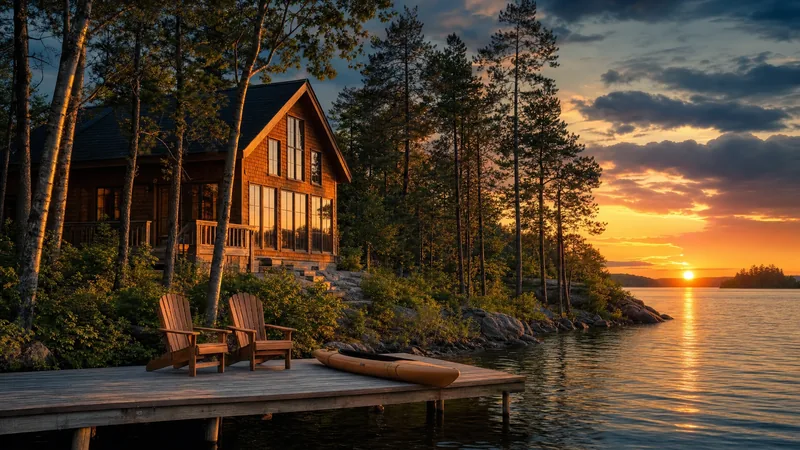
How to Start an Airbnb in Wisconsin: Tourist Rooming House License and Room Tax
How to Start an Airbnb in Wisconsin: Tourist Rooming House License and Room Tax
If you plan to rent a room, apartment, cabin or house on Airbnb or another short-term rental site in Wisconsin, the paperwork starts with one question: how many nights a year will you rent? Once you rent for more than 10 nights a year, state law requires a tourist rooming house license from the Department of Agriculture, Trade and Consumer Protection (DATCP). You will also need a seller's permit, room tax registration with your municipality, and whatever local license or zoning approval your city, village, town or county requires.
This guide walks through those steps in the order most hosts should take them. It is informational content, not legal or tax advice. Short-term rental rules depend on your property, your municipality and how you operate. Confirm each step with the agency named, and consult a qualified attorney or CPA before you make decisions with significant legal or tax consequences.
What You Need Before You Start
Gather these items before you file anything. Most of them take a few minutes to find, but missing one can stall an application for weeks.
- A realistic estimate of the nights you will rent each year, split into stays of under 7 nights and stays of 7 nights or more
- The property address and the name of the owner on the deed, which you will need for zoning checks, the license application and room tax registration
- The tax identification number that matches your business structure. Confirm the exact requirement on the Department of Revenue registration page before you apply
- Your legal name and, if you plan to rent under a different brand name, the trade name you want to use
- Contact details for your municipal clerk and zoning office. Many clerks answer written questions more reliably than phone calls, so have an email address ready
- A budget that covers the fees listed in the table below, plus the cost of any repairs the inspector may ask for
Here are the fees you should plan for. Confirm each one with the agency before you pay, because schedules change.
| Item | Cost | Paid to |
|---|---|---|
| Tourist rooming house license, one rooming house (annual) | $296 per year | DATCP, or the agent health department (see Step 6) |
| One-time pre-inspection, one rooming house | $592 | DATCP, or the agent health department |
| Tourist rooming house license, 2 to 4 rooming houses where DATCP licenses directly | $450 annual and $900 pre-inspection | DATCP |
| Seller's permit, initial two-year period | $20 | Wisconsin Department of Revenue |
| Seller's permit renewal, each two-year period | $10 | Wisconsin Department of Revenue |
| Trade name registration (optional, per name) | $15 | Wisconsin Department of Financial Institutions (DFI) |
| LLC articles of organization (optional) | $130 | DFI |
| LLC annual report (optional) | $25 | DFI |
| Local license or permit, if your municipality requires one | Set by the municipality | Your municipal clerk |
Two notes on the table. DATCP sets its fees in tiers by the number of tourist rooming houses you operate, so an operator with two to four rooming houses pays $450 annual and $900 pre-inspection for that tier. Also, the DATCP fees rise 5% on April 1, 2028, so a license you obtain now will cost more when it renews after that date.
Step 1: Decide How Many Nights You Will Rent
The state threshold is the first fork in the road. Anyone who operates a short-term rental for more than 10 nights a year needs a DATCP tourist rooming house license under s. 66.1014(2)(d)2., Wis. Stats., plus any local license the municipality requires. If you expect to rent 10 nights or fewer in a year, the state license requirement may not apply to you, but local rules can still apply regardless of how many nights you rent.
Count nights, not bookings. A single 14-night stay counts as 14 nights. Keep a running log from your first rental, because the count determines whether you need the license and because the clerk notice in Step 3 depends on when your rental period begins.
Pick your rental pattern before you buy or prepare the property. A unit you plan to rent only by the night, in a city that restricts short stays, is a different project from a unit you plan to rent for a week or longer.
Step 2: Check Local Zoning and Licensing First
Wisconsin has no general business license at the state or county level, and most cities have none. The local layer for short-term rentals usually comes from zoning and from any business or rental ordinance your municipality has adopted. Some municipalities, such as Lake Geneva, do require a local business license, so the answer depends on where the property is.
Section 66.1014, Wis. Stats., limits what your municipality can do, and these limits shape your options:
- A municipality cannot ban rentals of 7 or more consecutive days.
- For rentals of 7 to 29 days, a municipality may cap the rental period at no fewer than 180 days in a 365-day period, and it may require those days to run consecutively.
- A municipality may restrict stays of under 7 days.
That last point matters most for Airbnb hosts. Many listings are built around one- to four-night stays, and a city can restrict those even when it cannot ban longer rentals. Before you sign a lease, buy a property or spend money on furnishings, ask the zoning office in writing whether short stays are permitted at the address, whether any cap applies, and whether the city requires its own license. Keep the reply in your file.
Step 3: Notify the Municipal Clerk Before Your First Rental
Under s. 66.1014, you must notify the municipal clerk when your first rental in a 365-day period begins. The notice is tied to the start of a rental period, not to the calendar year, so the first booking in each new 365-day window triggers the requirement again. A host who rents across many months can lose track of this quickly, so put the date of the first rental on your calendar and set a reminder to recheck the 365-day window.
Ask the clerk what form the notice takes, whether it must be in writing, and where to send it. Keep a copy and the clerk's confirmation with your license papers. If you have a question about how the notice applies to a rental pattern that starts and stops, ask the clerk before you accept bookings.
Step 4: Choose Your Business Structure
You can operate a rental as a sole proprietor without forming an entity. Many hosts start this way, and it keeps the filing and fee burden low. The tradeoff is that the property and your personal assets are not separated from the rental business, which can matter if a guest is injured or a dispute goes to court. Forming a limited liability company (LLC) adds a layer of separation, but it does not protect you from every claim, and it does not replace insurance.
If you form an LLC, you file Articles of Organization, Limited Liability Company (Form 502) with DFI under s. 183.0201, Wis. Stats. The filing fee is $130. Several details matter:
- The name must contain "limited liability company" or "limited company," or the abbreviation "LLC" or "LC." Search existing names in the DFI business search before you file. A name check is not final until DFI files the document.
- Every LLC must maintain a registered agent with a physical street address in Wisconsin. A P.O. box does not qualify, and an LLC cannot name itself as its own registered agent. The registered agent's email address is required on the formation document and on every annual report.
- The annual report costs $25 and is due during the calendar quarter that contains your anniversary of organization: March 31 for organization from January 1 to March 31, June 30 for April 1 to June 30, September 30 for July 1 to September 30, and December 31 for October 1 to December 31.
- Wisconsin imposes no separate LLC franchise or privilege tax. A single-member LLC is generally a disregarded entity, and a multi-member LLC is generally treated as a partnership by default, so profits flow through to the owners' individual income tax at Wisconsin's graduated rates of 3.50% to 7.65%. Ask a CPA how your structure affects your return.
You can file online through the DFI Business Entity File Online portal at dfi.wi.gov. Online filings are in most cases accepted upon receipt, and DFI's statutory limit for processing new business filings is 5 business days. Expedited service is available for an additional $100.
Step 5: Register for a Seller's Permit
Wisconsin has no single general business license, but tax registration is effectively universal. Any seller of taxable products or services must hold a seller's permit from the Department of Revenue (DOR). You can register through the DOR Business Tax Registration system at tap.revenue.wi.gov/BTR/ or through the Wisconsin One Stop Business Portal at onestop.wi.gov. The initial permit costs $20 for a two-year period, and renewal costs $10 every two years.
The tax rules for rentals are split between hosts who book directly and hosts who book through a marketplace platform:
- Direct-booking hosts hold a seller's permit and register for room tax with the municipality.
- Marketplace platform hosts rely on the platform, which collects sales and room tax on bookings it processes.
If you list only on a platform, ask DOR whether you still need a seller's permit and whether any tax is left for you to report. Do not assume the platform handles every obligation. Get the answer in writing where you can.
Step 6: Apply for the Tourist Rooming House License
The tourist rooming house license is issued by DATCP under ATCP 72, which was recreated effective January 25, 2026. For one rooming house, the schedule lists $296 per year plus a one-time $592 pre-inspection fee. For 2 to 4 rooming houses where DATCP licenses directly, the schedule lists $450 and $900. Some counties and municipalities have a local health department that acts as DATCP's agent. Agent health departments set their own fees, so if your property falls under one, request that department's fee schedule and application process before you pay anything.
Here is the sequence most applicants follow:
- Confirm the agency. Ask DATCP or your local health department whether they license your property directly or through an agent.
- Submit the application and fee. Use the current form from DATCP or the agent department, and keep a copy of everything you submit.
- Schedule the pre-inspection. The inspection happens before the license is issued. Ask the inspector for a written checklist and any items they expect to check, so you can address them ahead of time.
- Correct any findings. If the inspector identifies problems, fix them and request a re-inspection if the agency requires one. Ask how long the agency takes to process applications, and do not plan a launch date around a guess.
- Calendar the annual renewal. The license is an annual fee. Plan the renewal in advance so the license does not lapse between bookings.
If you plan to offer meals or other food service to guests, ask DATCP whether that changes the license or requires a separate approval. Do not assume a rental license covers it.
Step 7: Register for Room Tax With Your Municipality
If you are a direct-booking host, register for room tax with your municipality. Room tax rates and filing schedules are set locally, so the clerk or finance office is the source for the current rate, the registration form and the filing deadline. Ask for the rate in writing, and confirm whether the rate is the same for all your rental periods.
Platform hosts should check their platform's tax settings. Confirm which taxes the platform collects, which municipalities it covers and whether it remits the money directly or sends it to you. If your municipality requires something the platform does not collect, you may still have a filing obligation. Ask the clerk and the platform, and keep their answers in your file.
Sales tax may also apply to lodging charges in some situations. The state sales tax rate is 5%, but whether it applies to your particular rental, and how, is a question for DOR. Confirm it with the Department of Revenue before you file your first return.
Step 8: Set Up Your Listing and Records
Before your first booking, assemble a single folder, paper or digital, with the license, the seller's permit, your clerk notice and confirmation, the zoning reply, your LLC filing if you formed one, and your room tax registration. Keep copies of every invoice, inspection report and tax filing for at least as long as the agencies you deal with require. Ask each agency how long it expects you to keep records, because the answer varies by tax and by program.
Make sure your listing description, house rules and pricing match your license and your local rules. A listing that advertises a minimum stay shorter than what your municipality permits is an easy problem to create and a hard one to fix after guests have booked.
Track three numbers every month: nights rented, gross booking revenue and room tax collected or owed. The night count tells you whether you have crossed the 10-night threshold and whether you are approaching a 365-day limit. The revenue and tax numbers feed your room tax filings and your income tax return.
Step 9: Calendar Your Renewals and Filings
Set reminders for every recurring obligation on the day you finish your setup:
- Tourist rooming house license renewal, annually, before the current license expires
- Seller's permit renewal, every two years at $10
- Room tax filings, on the schedule your municipality sets
- LLC annual report, if you formed an LLC, due in the quarter that contains your anniversary of organization
- The 365-day window, which restarts with each new first rental period, for the clerk notice
Common Mistakes to Avoid
- Counting only one platform's bookings. Your 10-night threshold counts every night you rent, whether booked on Airbnb, a direct website, or by phone.
- Accepting bookings before the license is issued. Wait for the license in hand. A booking on the calendar is not a license.
- Assuming the state license is the only requirement. A property can need a DATCP license and still be blocked by local zoning or a local ban on stays under 7 nights.
- Skipping the zoning question. Ask in writing before you buy or furnish a property, not after the first complaint.
- Missing the clerk notice. The notice applies at the start of each 365-day rental period, so one missed notice can repeat over time.
- Trusting the platform to handle everything. Confirm what the platform collects and what you still report.
- Using a P.O. box for an LLC's registered office. Wisconsin requires an actual street address for the registered office.
- Budgeting only the annual fee. The one-time pre-inspection fee is due up front, and repairs found during inspection are additional costs.
- Relying on old figures. The DATCP schedule was recreated effective January 25, 2026, and fees rise on April 1, 2028. Check the current schedule before you budget.
What to Expect
Expect to deal with several agencies rather than one. A typical setup involves DFI for an entity if you form one, DOR for the seller's permit and any state tax questions, DATCP or an agent health department for the rooming house license, and your municipality for the clerk notice, zoning and room tax. Each agency has its own timeline and its own forms.
If you complete the steps in order, you can reasonably expect a licensed, registered and tax-compliant rental that is easier to defend if a neighbor, inspector or tax office asks questions. Outcomes depend on your property, your market, your local rules and how you run the rental, and no particular booking volume or income level is guaranteed.
Where to Get Official Information and Help
- Business entity search and forms: DFI business entity search
- File entity documents online: DFI Business Entity File Online
- Seller's permit and state tax registration: Wisconsin Department of Revenue, new business
- Business Tax Registration: DOR Business Tax Registration
- One registration for DFI, DOR and workforce purposes: Wisconsin One Stop Business Portal
- Free advising on starting a business: Wisconsin Small Business Development Center Network
- Federal and state small business resources: SBA Wisconsin district office
For the tourist rooming house license, search the DATCP website for its tourist rooming house program and ask DATCP directly whether your property is licensed by the state or by an agent health department. Your municipal clerk and zoning office will answer the local questions. For anything involving entity structure, liability, insurance, or the tax treatment of your rental income, consult a qualified attorney or CPA before you commit.
Keep exploring: related Wisconsin guides
- How to Start a Boat, Snowmobile or ATV Rental Business in Wisconsin
- How to Start an Airbnb in Door County
- How to Start a Bed and Breakfast in Wisconsin
- How to Start an Airbnb in Madison, Wisconsin
- How to Start an LLC in Wisconsin
- Wisconsin Business License
- How Much Does It Cost to Start a Business in Wisconsin
- All Wisconsin business types
- Every Wisconsin guide in one place