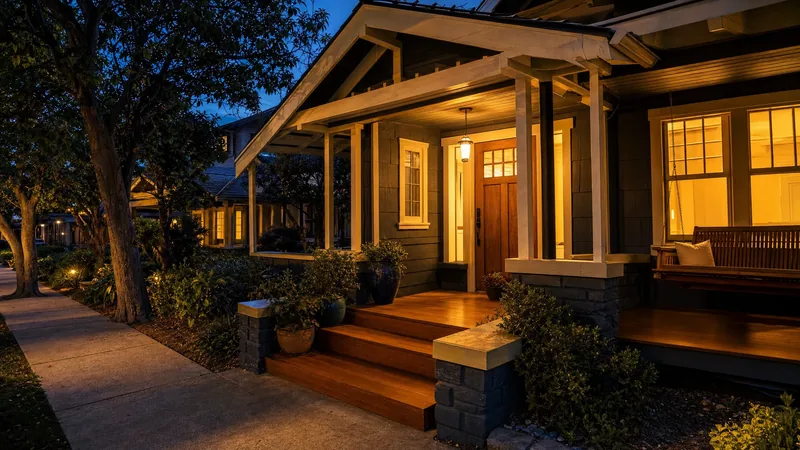
How to Start an Airbnb in Milwaukee
How to Start an Airbnb in Milwaukee
Listing a Milwaukee home or room on Airbnb is simple. Running a short-term rental legally is harder. A milwaukee short term rental has to clear zoning, a city licensing process, state tax registration and room tax rules before the first guest checks in. This guide walks through those steps in the order most hosts should handle them. It covers the fees and agencies involved, and it flags what you must confirm with the agency before you rely on it.
Informational content, not legal or tax advice. Zoning, licensing and tax rules change, and your property and ownership situation may raise issues this article does not cover. Talk with a qualified attorney and a CPA who works with short-term rentals before you sign a lease, buy a property or choose a business structure.
What You Need Before You Start
Gather these items before you file anything. Several agencies ask for the same information, so having it ready prevents delays.
- The exact property address, plus proof that you own the property or a written lease that permits short-term subletting
- Written permission from your landlord, condo association or homeowners association if any of them restricts rentals
- A floor plan of the unit, drawn to scale, showing sleeping rooms, bathrooms, exits, and smoke and carbon monoxide detectors. The tourist rooming house application requires a floor plan.
- The business name you want, checked against DFI records
- A Wisconsin registered agent with a physical street address, if you form an LLC
- A business email address for official notices, since DFI directs annual report forms and notices to the registered agent
- A business bank account and a card you use only for the rental
- An Employer Identification Number (EIN) and the Social Security number you will use for tax registration
- A quote for short-term rental insurance (see Step 9)
Costs at a Glance
| Item | Cost | Where to confirm |
|---|---|---|
| LLC Articles of Organization | $130 filing fee | Wisconsin DFI |
| Expedited LLC service (optional) | $100 added to the filing fee | Wisconsin DFI |
| LLC annual report | $25 online, $40 by mail | Wisconsin DFI |
| Trade name registration (optional) | $15 | Wisconsin DFI |
| Seller's Permit | $20 for the first two years, $10 for each two-year renewal | Wisconsin DOR |
| Tourist rooming house license | Confirm the fee with DNS | City of Milwaukee Department of Neighborhood Services |
| Milwaukee room taxes | 3% basic room tax (Milwaukee County exposition district) and 7% additional room tax, plus 7.9% combined sales tax | City of Milwaukee and Wisconsin DOR |
Step 1: Confirm Zoning Allows Short-Term Rentals at Your Address
Zoning comes first because it can rule out a property before you spend money on anything else. Ask City of Milwaukee zoning staff whether short-term rental use is allowed at your address, in your zoning district, and whether any special approval applies. Get the answer in writing if you can. An Airbnb listing from a neighbor is not proof that your address is allowed.
Next, read your lease or your condo or association documents. Many leases prohibit subletting, and many associations restrict short-term rentals even where the city allows them. A city approval does not override a private restriction, and a violation can end the rental no matter what the city permits.
Step 2: Ask About a Certificate of Occupancy
If you do not live in the unit, ask whether a certificate of occupancy applies. This is a common question for non-owner-occupied units, and the answer depends on how the unit is used and classified. Put the question to the Department of Neighborhood Services and the city's zoning staff in writing. Do not assume the answer based on another property, another neighborhood or another host's experience.
Step 3: Choose a Business Structure
You can operate as a sole proprietor, form an LLC or form a corporation. Many hosts choose an LLC to keep the rental separate from personal assets. An LLC does not shield you from every liability, and it does not replace insurance. Talk with an attorney before you choose.
To form an LLC, you file Articles of Organization, Limited Liability Company (Form 502), with the Wisconsin Department of Financial Institutions (DFI). Business entities in Wisconsin are filed with DFI, not with the Secretary of State. Key points:
- Filing fee: $130. You can file through DFI's online filing system. Online filings are in most cases accepted on receipt, and DFI's statutory limit for processing new business filings is 5 business days.
- Expedited service (optional): $100 on top of the filing fee. The document is acted upon by the close of business on the first business day after receipt.
- Name: The name must include "limited liability company," "limited company," "LLC" or "LC" (or a variation that differs only in capitalization or punctuation). It must be distinguishable on DFI records. You can run a preliminary check in the DFI corporate records database, but availability is final only once DFI files the document.
- Registered agent: Every LLC must continuously maintain a registered agent with a registered office in Wisconsin. The office must be an actual physical street address, not only a P.O. box, mailbox service or answering service. The agent's email address is required on the formation document and on every annual report. Your LLC cannot name itself as its own registered agent.
- Annual report: $25 online or $40 by mail. It is due each year during the calendar quarter that contains your anniversary of organization. An LLC organized between January 1 and March 31 files by March 31, one organized between April 1 and June 30 files by June 30, and so on.
Wisconsin does not impose a separate LLC franchise or privilege tax. By default, a multi-member LLC is taxed as a partnership and a single-member LLC as a disregarded entity, so profits flow through to the owners' individual income tax at graduated rates of 3.50% to 7.65%. The $25 online annual report is the only recurring state entity charge for a standard LLC. Confirm how your LLC should be classified with a CPA.
Step 4: Register a Trade Name if You Need One
If you plan to list under a brand name that differs from your legal name or LLC name, you can register a trade name with DFI for $15 per trade name. Filing is online or in person. Renewal is also $15 and can be filed in the six months before the registration expires. Registration is optional, but it helps you show the public which entity runs the listing. If you need time to prepare, DFI offers a name reservation for $15 that lasts 120 days. Confirm current details on the DFI trade name fees page.
Step 5: Get a Seller's Permit From the Department of Revenue
Wisconsin issues no general statewide business license. The registration almost every taxable seller needs is the Seller's Permit, issued through the Department of Revenue's Business Tax Registration. It costs $20 for an initial two-year period and $10 to renew each subsequent two years. You can apply through the Department of Revenue new business page or the Business Tax Registration system. If you are also registering with DFI, the Wisconsin One Stop Business Portal registers a new business with DFI, the Department of Revenue and the Department of Workforce Development in one pass.
Your guest stays are subject to the sales and room taxes described in Step 8. Confirm with the Department of Revenue how your rental should be registered and reported.
Step 6: Apply for a Tourist Rooming House License
In Milwaukee, the Department of Neighborhood Services (DNS), Environmental Division, acts as the state's agent for tourist rooming house licenses. Plan on this license as the core operating permit for a Milwaukee short-term rental, then confirm with DNS that it applies to your unit. The process generally runs in four parts:
- Get the form and checklist. Request the current application and checklist from DNS. Use the current version, because older forms cause rejected applications.
- Submit the application with a floor plan. Include a scaled floor plan that matches the sleeping areas and exits you plan to advertise.
- Pay the fee. Confirm the exact amount and accepted payment methods with DNS before you submit.
- Pass an inspection. Fix every item on the checklist before the inspection, and confirm with DNS whether you can take bookings before the inspection is complete. The safe answer is no.
Ask DNS how long the license stays valid, what renewal requires and whether any change to the unit, such as adding a bedroom, requires a new review.
Step 7: Check for a Separate Short-Term Rental Permit
Ask the City of Milwaukee whether a separate short-term rental permit or registration applies on top of the tourist rooming house license. Ask DNS the same question. Municipal rules for short-term rentals change, so ask both offices directly and get the answer in writing. Do not rely on another host's description of the city's process.
Step 8: Understand Milwaukee Room Taxes and Sales Tax
Inside the City of Milwaukee, the taxes that most hosts need to plan for include:
- The Milwaukee County exposition district basic room tax of 3%
- The additional room tax of 7% inside the City of Milwaukee
- The 7.9% combined sales tax
Confirm which of these apply to your stay length and how each is filed and paid. The City of Milwaukee and the Wisconsin Department of Revenue are the agencies to ask. Some booking platforms collect certain taxes for hosts in some places. Whether that covers all of your obligations in Milwaukee is a question to confirm, not assume. Ask the platform exactly what it collects and remits on your behalf, and what you still have to file yourself.
Keep a record of every booking with the dates, nightly rate, cleaning and other fees, and the taxes charged. Good records make filing easier and make an audit less painful.
Step 9: Set Up Insurance and Income Tax Tracking
Standard homeowners and renters policies often exclude or limit business use, and a rental with frequent guests is a common claim problem. Ask your insurer specifically for short-term rental coverage and get the quote in writing. Read what the platform's host protection covers and what it does not. Platform protection is not a substitute for your own policy.
Open a separate bank account for the rental. Track income and expenses from the first booking, including cleaning supplies, repairs, furnishings, utilities, software and mileage. A CPA can tell you which costs are deductible and how the rental fits into your personal return, which is especially important when a single-member or multi-member LLC is involved.
Step 10: Build the Listing and Guest Process
Write a listing that matches the property. Use current photos, describe the layout accurately and state the house rules, check-in method and cleaning standards. Set your pricing calendar based on comparable Milwaukee listings in your neighborhood and season, not on a single booking you saw online.
List only the sleeping spaces and guest count shown on your floor plan and licensing paperwork. If the platform asks for a license or registration number, enter the number you were actually issued. Never list a space or capacity that the inspection did not approve.
Step 11: Open for Bookings and Keep the Calendar
Before the first booking, confirm that you have your license and passed inspection, your Seller's Permit is active, your LLC or trade name paperwork is filed, your insurance is in force and your tax tracking is set up. Then open the calendar.
Set reminders for the annual report due date, the Seller's Permit renewal every two years, the trade name renewal if you registered one, and the tourist rooming house license renewal. A missed deadline is easy to avoid and hard to fix quickly.
Tips for Running a Milwaukee Short-Term Rental
- Start with the zoning and lease questions. They can end the project before you spend on filings.
- Get every city and state answer in writing, and keep the emails or letters with your records.
- Name the registered agent who will reliably receive DFI mail, and confirm the agent's email address is monitored.
- Use a separate bank account and card so tax records stay clean.
- Ask your inspector about any item that is unclear before the inspection, not during it.
- Review your pricing and occupancy each season, and update the listing whenever the unit or license changes.
Common Mistakes to Avoid
- Listing before approvals are final. A live listing with no license can lead to cancelled bookings and refunds.
- Assuming Wisconsin or Milwaukee has a general business license. The state has none, and most cities do not either. Your requirements are the specific registrations and licenses described above.
- Skipping the landlord or association. A verbal okay is not enough. Get written permission.
- Choosing a registered agent with a P.O. box. Wisconsin requires a physical street address in the state. A mailing address will not satisfy the rule.
- Forgetting the annual report. Missing the window creates avoidable compliance problems for your LLC.
- Changing the agent without filing. A statement of change of registered agent or office costs $10 online or $25 on paper.
- Mixing personal and rental money. Commingled accounts make tax filing and audits harder.
- Underinsuring the property. A personal policy may not cover guest injuries or property damage from a rental.
Expected Results
Hosts who work through these steps in order generally reach a compliant, bookable listing with fewer surprises than hosts who skip them. Results vary widely. Income depends on the property, the season, your pricing, your reviews and how much time you put into guest communication and upkeep. This guide does not promise occupancy, revenue or approval timing. Treat your first year as a test period, track actual numbers, and review them with a CPA.
Official Resources
- Wisconsin DFI, Business Entities general information
- Wisconsin DFI corporate records search
- Wisconsin DFI trade name fees
- Wisconsin Department of Revenue, new business
- Wisconsin One Stop Business Portal
- Wisconsin Small Business Development Center Network, free advising for new owners
- SBA Wisconsin district office
Before you commit money or sign anything, confirm each item marked for confirmation with the named agency, and talk with a qualified attorney and a CPA. Rules change, and the agency's current published guidance is the final word.
Keep exploring: related Wisconsin guides
- How to Start an Airbnb in Madison, Wisconsin
- How to Start an Airbnb in Wisconsin Dells and Lake Delton
- How to Start an Airbnb in Door County
- How to Start a Wedding or Event Venue in Wisconsin Under the 2026 Alcohol Rules
- How to Start an LLC in Wisconsin
- Wisconsin Business License
- How Much Does It Cost to Start a Business in Wisconsin
- All Wisconsin business types
- Every Wisconsin guide in one place