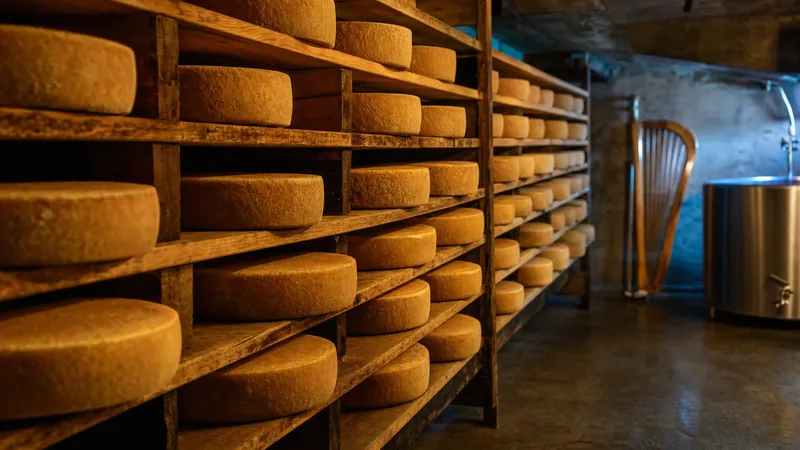
How to Become a Licensed Cheesemaker and Start a Cheese Business in Wisconsin
How to Become a Licensed Cheesemaker and Start a Cheese Business in Wisconsin
Wisconsin is one of the only states that requires a person to hold a license to make cheese. The state made 3.64 billion pounds of cheese in 2025, and the cheesemaker license is the credential that lets you make cheese for sale under your own name. If you want to open a cheese business here, the license is the first gate, but it is not the only one. You will also need a dairy plant license for the facility, a legal business entity, a seller's permit, and in many cases a retail food license if you sell in a shop. This guide walks through each step in order and points out where people usually get stuck.
This article is informational content, not legal or tax advice. Fees, training routes, and application procedures can change, so confirm every figure with the agency named below before you commit money or sign a lease. For help choosing a business structure or handling taxes, talk to a qualified attorney and a CPA.
Know Which License Covers Your Role
Wisconsin issues several dairy credentials, and newcomers often mix them up. Figure out which one matches what you will actually do before you apply for anything.
- Cheesemaker license: $75, with a 2-year term. This is the license required to make cheese. It is governed by s. 97.17 of the Wisconsin Statutes and chapter ATCP 69 of the Wisconsin Administrative Code.
- Buttermaker license: $75, with a 24-month experience requirement. This is the license required to make butter. Confirm the qualifying experience route with DATCP.
- Dairy plant license: issued by the Department of Agriculture, Trade and Consumer Protection (DATCP) for the facility where cheese is made. It expires April 30 each year. The fee varies by plant grade and volume, so check DATCP's fee schedule for your numbers.
- Retail food license: required if you operate a retail cheese shop that sells to consumers. Confirm the application path with DATCP or your local health department, which acts as DATCP's agent for some licenses.
- Master Cheesemaker: a voluntary training and recognition program offered through the University of Wisconsin and the Center for Dairy Research. It is not a license, and you do not need it to make cheese legally.
For most people starting a cheese business, the path is the cheesemaker license, then the dairy plant license, then the business registrations. The buttermaker license matters if you plan to make butter in the same operation.
Materials and Records You Need Before You Apply
The licensing process is paperwork-heavy, and the cheesemaking side needs equipment and ingredients that meet your plant's requirements. Gather these before you start:
- Experience records: dated logs of your hands-on work, signed by the licensed cheesemaker who supervised you. Keep them from day one.
- Training documentation: certificates or transcripts from any University of Wisconsin short course or other approved training you complete.
- Identification and contact details: the legal name, mailing address, and email you will use on every application.
- Pasteurized milk from an approved source: your supplier, quantity, and delivery schedule should be settled before you build the plant.
- Starter cultures, coagulant, and salt: the specific cultures and coagulant depend on the cheese style you make. Use food-grade, non-iodized salt for most cheeses.
- Vat, press, molds, and cheesecloth: the core make equipment for most cheese styles.
- Thermometer and pH meter: accurate measurement is the difference between a repeatable recipe and a guess.
- Cleaning and sanitizing supplies: a plan and the materials to keep every surface clean between batches.
Step 1: Confirm Your Training Route
Wisconsin licenses cheesemakers based on experience, and the rules are one reason the state stands out. The standard route requires 18 months of work as a cheesemaker assistant under a licensed cheesemaker. Other routes are available: 12 months of assistant experience combined with a University of Wisconsin short course, or 6 months combined with a short course, depending on the training you complete. Confirm with DATCP exactly which combination applies to your background before you count any time, because a wrong assumption can delay your application by months.
Work out your route on paper first. Write down the start date of your assistant work, the name and license number of the supervising cheesemaker, and the training you have completed. If you are still choosing a plant to work in, pick one with a licensed cheesemaker who will sign off on your hours.
Step 2: Log Your Assistant Hours Correctly
Experience is the requirement most applicants underestimate. Informal help around a creamery does not automatically count. Your log should show the dates, the hours, the tasks you performed, and the supervising cheesemaker's signature. Ask DATCP whether the format you are using is acceptable before you rely on it.
Keep the originals in a safe place and make a digital copy. If your supervisor changes jobs, get a signed statement before you lose contact.
Step 3: Pass the Written Exam
Wisconsin requires a written exam for the cheesemaker license. Confirm the current exam format, scheduling process, and study materials with DATCP, because the details can change. Study the specific topics the exam covers rather than general cheesemaking books alone. Many applicants combine the assistant work with the University of Wisconsin training so the exam feels like a review of material they already use daily.
Step 4: Submit the Application and Pay the $75 Fee
Once you meet the experience and exam requirements, submit the cheesemaker license application to DATCP and pay the $75 fee. The license runs for 2 years, so put the renewal date on your calendar the day you receive it. Confirm the current application form, payment methods, and processing time on DATCP's website before you send anything.
Step 5: Form Your Business Entity With DFI
Business entities in Wisconsin are filed with the Department of Financial Institutions (DFI), Division of Corporate and Consumer Services, not with a Secretary of State. You can file online through the DFI Business Entity File Online portal, and you can search existing names in the DFI corporate records database.
For an LLC, the Articles of Organization (Form 502) cost $130 under s. 183.0201 of the Wisconsin Statutes. The name must include 'limited liability company,' 'limited company,' 'LLC,' or 'LC,' and it must be distinguishable from other registered names. A preliminary search is not a guarantee, because availability is final only when DFI files the document. If you need time to finish paperwork, a name reservation costs $15 and holds the name for 120 days.
A corporation files Articles of Incorporation, Stock, For-Profit Corporation (Form 2) under chapter 180 of the Wisconsin Statutes for $100. Each entity type has its own ongoing costs. Confirm the right structure with a CPA and attorney before you file, since changing it later is expensive.
Every LLC and corporation must maintain a Wisconsin registered agent with a physical street address. A P.O. box, mailbox service, or answering service does not qualify. The registered agent's email address is required on the formation document and every annual report. The entity cannot name itself as its own registered agent. Changing the agent or office costs $10 online or $25 on paper.
Step 6: Register With One Stop and the Department of Revenue
The Wisconsin One Stop Business Portal can register a new business with DFI, the Department of Revenue, and the Department of Workforce Development in one pass. Using it saves you from filing three separate sets of forms.
Any seller of taxable products or services needs a Seller's Permit from the Wisconsin Department of Revenue. The initial permit costs $20 for a two-year period, and renewal costs $10 every two years. Cheese is food, and food and food ingredients are exempt from Wisconsin sales tax unless they are prepared food, candy, soft drinks or dietary supplements. If you also sell taxable items, such as prepared food, gift boxes with nonfood items or merchandise, you will need the permit and must collect tax on those sales. Confirm your mix with DOR. Apply through the Business Tax Registration system. Get the permit before your first taxable sale.
Step 7: Obtain the Dairy Plant License From DATCP
The facility where you make cheese needs a DATCP dairy plant license. It expires April 30 each year, and the fee varies by grade and volume. Confirm the current fee schedule and plant requirements with DATCP before you finalize a building lease, equipment order, or construction contract. Plant design decisions are expensive to reverse, so talk to DATCP early about your floor plan, water supply, and waste handling.
Plan your timing around the April 30 expiration. A plant that is ready to open in June still needs its license in place before it can operate legally.
Step 8: Check Local Zoning, Permits, and Retail Licensing
Wisconsin has no general business license at the state or county level, and most cities do not issue one either. A few cities do, such as Lake Geneva, so check with your municipal clerk. Cities and counties also add their own zoning, building, and signage rules, and a cheese plant in a farm building or a shop in a downtown storefront can face very different requirements.
If you sell cheese in a retail shop, you will need a retail food license. Confirm the application path with DATCP or your local health department before you sign a lease, because the health inspection can affect your floor plan and sink placement.
Step 9: Decide Whether to Register a Trade Name
If your cheese brand uses a name different from your legal entity name, you may register it as a trade name with DFI for $15. Registration is optional, but it helps you show that the name belongs to your business. Trade names are filed through the DFI Trademarks and Trade Names page, which states that filings are accepted online or in person. Renewal costs $15 and can be filed in the six months before expiration.
Cost Summary
The table below lists the figures covered in this guide. Anything marked 'confirm' is not a settled number, so check it with the named agency.
| Item | Cost | Agency | Notes |
|---|---|---|---|
| Cheesemaker license | $75 | DATCP | 2-year term |
| Buttermaker license | $75 | DATCP | 24-month experience requirement |
| Dairy plant license | Varies, confirm | DATCP | Expires April 30 |
| Retail food license | Confirm | DATCP or local health department | Required for retail cheese shops |
| LLC Articles of Organization | $130 | DFI | Form 502 |
| Corporation Articles of Incorporation | $100 | DFI | Form 2 |
| Name reservation | $15 | DFI | Holds the name for 120 days |
| LLC annual report | $25, or $40 by mail | DFI | Due in the quarter of your anniversary |
| Trade name registration | $15 | DFI | Optional |
| Seller's Permit | $20 initial, $10 renewal | Department of Revenue | Two-year periods |
Common Mistakes to Avoid
- Counting informal help as assistant time. Without signed, dated logs, your hours may not qualify. Start your records on day one.
- Filing with the wrong agency. Entities go to DFI, and sales tax registration goes to the Department of Revenue. Cheese licenses come from DATCP.
- Assuming a state business license exists. Wisconsin does not issue a general business license, so your real requirements are the activity-specific licenses and registrations in this guide.
- Confusing the Master Cheesemaker program with the license. The program is voluntary training and recognition. It does not replace the cheesemaker license.
- Building the plant before confirming plant requirements. Layout, water, and waste decisions are costly to reverse. Ask DATCP before you commit.
- Missing the April 30 plant license date. Plan the calendar so your plant is licensed before you begin production.
- Using a P.O. box for the registered office. The registered office must be a physical street address.
- Selling before the seller's permit is issued. Register with the Department of Revenue before your first taxable sale.
What to Expect From the Process
Completing these steps means you can make cheese under your license, provided your plant is licensed and your business is properly registered. It does not guarantee sales, profit, or a particular product outcome. Most new makers spend their first months on the experience requirement, so use that time to learn the recipes, cleaning routines, and record keeping you will rely on later. Many cheesemakers say the assistant period is where the production routine takes shape, but results depend on your milk, equipment, and recipes.
Wisconsin's cheese industry is large and competitive, so expect the first year to be about building repeat buyers, not just getting licensed. The Wisconsin Small Business Development Center Network offers free counseling for business planning, and its resources are available through the Wisconsin SBDC site. The SBA Wisconsin district page lists additional resources for small food businesses.
When to Get Professional Help
Hire a qualified professional before you file if any of these apply: you plan to partner with another person, you will buy or lease a plant building, you want to sell cheese across state lines, or you are unsure whether your experience qualifies. An attorney can review your entity choice and contracts, and a CPA can advise on the income tax treatment of your structure. Wisconsin's personal income tax runs from 3.50% to 7.65%, and an LLC that elects corporate treatment faces a 7.9% corporate tax, so the structure decision has real money attached.
Next Steps
- Confirm which training route applies to your background with DATCP.
- Start a signed, dated log of your assistant hours.
- Complete the required training and prepare for the written exam.
- Choose your business structure with professional advice, then file with DFI.
- Register through One Stop and obtain your Seller's Permit before your first taxable sale.
- Apply for the dairy plant license and confirm plant requirements before you build or lease.
- Check city and county rules, and apply for a retail food license if you will sell in a shop.
Once you have worked through these steps, you will know exactly what your cheese business needs to open legally in Wisconsin, and you can start building the product and the customer base that make it worth running.
Keep exploring: related Wisconsin guides
- How to Start a Catering Business in Wisconsin
- How to Start a Brewery or Brewpub in Wisconsin
- How to Start a Coffee Shop Business in Wisconsin
- How to Start a Bakery Business in Wisconsin
- Wisconsin Liquor License
- How to Start an LLC in Wisconsin
- Wisconsin Business License
- How Much Does It Cost to Start a Business in Wisconsin
- All Wisconsin business types
- Every Wisconsin guide in one place