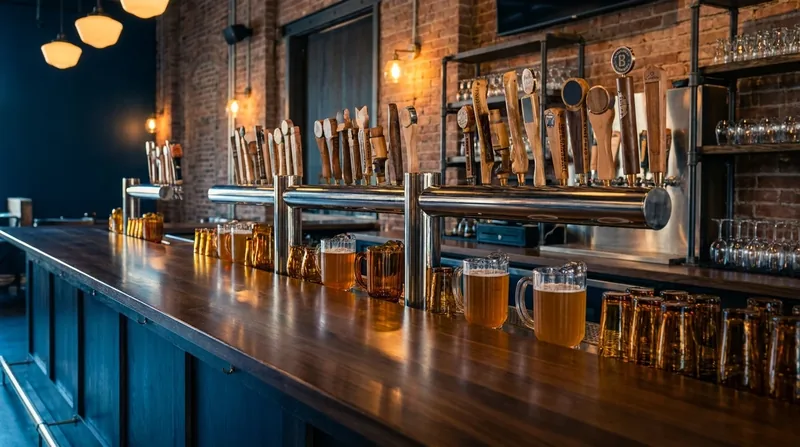
How to Start a Brewery or Brewpub in Wisconsin
How to Start a Brewery or Brewpub in Wisconsin
Opening a Wisconsin brewery means dealing with several agencies, and each one controls a different piece. The federal Alcohol and Tobacco Tax and Trade Bureau (TTB) authorizes you to brew. The Division of Alcohol Beverages (DAB) issues your state brewer or brewpub permit. The Department of Financial Institutions (DFI) registers your business entity. The Department of Revenue (DOR) registers you to collect sales tax. Your municipal clerk issues the license that lets you pour beer in a taproom. Each step is manageable on its own. Most delays come from doing them out of order.
Disclaimer: This article is general information, not legal or tax advice. Fees, license classes and rules change, and some items below are marked for you to confirm with the named agency. If you have investors, a lease with personal guarantees, or a distribution deal, work with a Wisconsin business attorney and a CPA before you file anything.
What You Need Before You Start
Gather these items before you file, since several of the agency applications ask for the same information.
- A written production plan. Estimate barrels per year, the split between taproom sales and wholesale, and whether you will self-distribute. These numbers decide whether you qualify for a brewpub and whether you stay under the limits described in Step 1.
- Brewing inputs. Malt, hops, yeast, and brewing water, plus a plan for water treatment and cleaning chemicals.
- Brewhouse and cellar equipment. A brewhouse, fermentation vessels, cold storage, and a cleaning station. If you package, add kegs or cans and a filling line. Equipment costs vary widely, so get written quotes rather than relying on published averages.
- Business documents. Your choice of LLC or corporation, a federal Employer Identification Number, government-issued photo ID for each owner, and a proposed name that meets Wisconsin naming rules.
- A registered agent. Every LLC and corporation must maintain a registered agent with a physical Wisconsin street address and an email address.
- A site plan and lease. Municipal and zoning reviews depend on the floor plan, seating count, and whether you plan a kitchen.
- A food safety plan if you will serve food or produce a food product such as pretzels or cheese.
Step-by-Step: Starting a Brewery or Brewpub in Wisconsin
Step 1: Choose between a brewery and a brewpub
A brewpub is not just a brewery with a bar menu. Under Wis. Stat. s. 125.295, a brewpub must operate a restaurant holding a Class B license. The brewpub and its group may brew no more than 20,000 barrels a year, and the brewpub may self-distribute up to 2,000 barrels a year to retailers. The brewpub permit costs $1,000 for a two-year term, the same as the brewer permit.
Make this decision first. Your permit type, your lease, your kitchen layout, and your distribution plan all depend on it. If you expect to outgrow the 20,000 barrel cap, or you plan to sell through wholesalers instead of self-distributing, a standard brewery permit may fit better. Confirm the classification with DAB before you sign a lease.
Step 2: Form your entity and register it with DFI
Wisconsin business entities are filed with the Department of Financial Institutions, Division of Corporate and Consumer Services. They are not filed with a Secretary of State. The main filings are:
- LLC: Articles of Organization, Limited Liability Company (Form 502), filing fee $130 online or $170 on paper.
- Corporation: Articles of Incorporation, Stock, For-Profit Corporation (Form 2), filing fee $100.
Your name must include "limited liability company," "limited company," "LLC" or "LC" (or a variation that differs only in capitalization or punctuation), and it must be distinguishable from names already on DFI records. You can run a preliminary search at the DFI corporate records search, but availability is final only when DFI examines and files your document. If you need time, a name reservation costs $15 and holds the name for 120 days.
File online through the DFI online filing page. Online filings are generally accepted on receipt, and DFI's statutory limit for processing new business filings is 5 business days. Expedited service costs $100 on top of the filing fee and is acted on by the close of business on the first business day after receipt.
Two details trip up first-time filers. The registered office must be a physical street address in Wisconsin, not a P.O. box, mailbox service or answering service, and it must match the agent's business office. The company cannot name itself as its own registered agent. An email address for the agent is required on the formation document and on every annual report.
Tax treatment also matters. Wisconsin imposes no separate LLC franchise or privilege tax. By default, a multi-member LLC is taxed as a partnership and a single-member LLC as a disregarded entity, so profits pass through to owners at individual rates of 3.50% to 7.65%. A corporation pays a 7.9% corporate income tax. Ask a CPA which structure fits your ownership and financing plans.
Step 3: File the federal TTB brewer's notice
Federal approval comes first. Before you brew for sale, you must file a brewer's notice with TTB. Ask TTB about the current form, filing method, timing and any fee, and confirm them on the agency's site before you commit to an opening date. Also ask TTB how federal labeling rules apply to the products you plan to sell, since labeling mistakes are costly to fix after packaging.
Do not treat the TTB notice as a formality. Your federal premises description, equipment list and production plan should match what you build and what you tell DAB. Inconsistencies between federal and state filings are a common source of delay.
Step 4: Secure a location and clear local approvals
Wisconsin has no general business license at the state or county level, and most cities and villages do not require one either. Local approval still matters a great deal for a brewery. Your municipal clerk issues the alcohol license for your taproom, and zoning and building departments decide whether the site can host manufacturing, seating and a kitchen.
Before you sign a lease, call the municipal clerk and the zoning office. Ask which license class covers an on-premises taproom, whether a brewpub kitchen needs a Class B license, how long the process takes, and whether council or committee action is required. Some municipalities restrict where alcohol may be sold or consumed, and a lease signed before that answer is confirmed can cost you months.
Step 5: Obtain your DAB permit
Your state production permit is the DAB brewer permit at $1,000 per two-year term. If you qualify for the brewpub model, the brewpub permit is also $1,000 on a biennial basis. Fees were reset under 2023 Wisconsin Act 73 and a DAB rule adopted in December 2024, so check the current figures and renewal dates with DAB before budgeting. Confirm which application forms apply, what supporting documents DAB requires, and whether your TTB notice must be approved before you apply.
Step 6: Plan for food licensing if you serve food
A brewery that serves food, or a brewpub that runs a kitchen, needs food licensing. Depending on your operation, you may need a food processing license for food you make, such as a pretzel line or a cheese board you sell, or a retail food license for food served on site. These are issued by the Department of Agriculture, Trade and Consumer Protection (DATCP) or by a local health department acting as DATCP's agent. Confirm which license applies, the fee, and the inspection schedule with the agency that serves your county. Build the kitchen to the plan that gets approved. Changing a finished kitchen after inspection is expensive.
Step 7: Register for sales tax with DOR
Any seller of taxable products or services in Wisconsin must hold a seller's permit, obtained through the Department of Revenue's Business Tax Registration. The initial permit costs $20 for a two-year period, and renewal costs $10 every two years. Wisconsin's state sales tax rate is 5%. Local sales tax may also apply to your sales, so confirm the local rate with DOR before you set your menu and taproom prices.
You can register through the DOR Business Tax Registration system or start from the DOR new business page. The Wisconsin One Stop Business Portal at onestop.wi.gov can register your business with DFI, DOR and the Department of Workforce Development in one pass.
Step 8: Learn the three-tier and tied-house rules before you sign distribution
Wisconsin uses a three-tier system. Producers sell to licensed wholesalers, wholesalers sell to retailers, and retailers sell to consumers. The tied-house rules limit financial and other ties between producers and retailers, so a brewer cannot freely own or control the places that sell its beer in the way a non-licensed business could. Act 73 changed some of these rules, and the details matter when you negotiate a wholesaler agreement or decide how much you can sell directly.
If you are a brewpub, self-distribution up to 2,000 barrels a year under s. 125.295 gives you a route that does not depend on a wholesaler. Have an attorney confirm in writing what your planned sales, taproom and retail arrangements allow, and confirm the current rules with DAB before you sign anything with a distributor.
Step 9: Build out, brew, and keep production records
With your permits in progress, build the brewhouse, cellar, cold storage and taproom to the approved plans. Keep production and sales records from your first brew. TTB and DAB may ask you to show what you made, where it went and how it was taxed, and records you build during startup are far easier to reconstruct than records you try to recreate later. Set up a simple batch log, a barrel count and a sales ledger that separates taproom sales from wholesale and self-distributed sales.
Step 10: Launch and calendar your renewals
Opening day is the start of compliance work, not the finish. Calendar every recurring obligation:
- LLC or corporation annual report: $25 online, or $40 by mail (the $15 paper surcharge applies). It is due during the calendar quarter that contains your anniversary of organization, so an entity organized between October 1 and December 31 is due December 31.
- DAB permit: renews each two-year term at the current fee.
- Seller's permit: renews each two years for $10.
- Trade name, if you registered one: renews for $15 and may be filed in the six months before expiration.
- Municipal license and any food license: confirm renewal dates with the clerk and the licensing agency.
Costs at a Glance
The table below lists the main fees. Items marked "confirm" should be checked with the named agency before you budget for them.
| Item | Amount | Agency | Notes |
|---|---|---|---|
| LLC Articles of Organization | $130 online, $170 paper | DFI | Expedited service adds $100 |
| Corporation Articles of Incorporation | $100 | DFI | Expedited service adds $100 |
| Name reservation | $15 | DFI | Holds the name for 120 days |
| Annual report (LLC or corporation) | $25 online, $40 by mail | DFI | Due in the quarter of your anniversary |
| Trade name registration | $15 | DFI | Optional, for a name other than your entity name |
| DAB brewer permit | $1,000 per two-year term | DAB | Fees reset under 2023 Act 73 and a December 2024 DAB rule |
| DAB brewpub permit | $1,000 biennial | DAB | Requires a restaurant with a Class B license |
| Seller's permit | $20 initial, $10 renewal | DOR | Two-year periods; state sales tax rate 5% |
| Change of registered agent | $10 online, $25 on paper | DFI | Needed if your agent changes |
| TTB brewer's notice | Confirm with TTB | TTB | Required before brewing for sale |
| Municipal taproom license | Confirm with clerk | Municipal clerk | Varies by city or village |
| Food processing or retail food license | Confirm with agency | DATCP or local health department | Needed if you make or serve food |
Common Mistakes to Avoid
- Treating the brewery and brewpub permits as interchangeable. The restaurant requirement, the barrel cap and the self-distribution limit apply only to the brewpub model.
- Signing a lease before checking zoning and the municipal alcohol license. A site that cannot host a taproom is an expensive mistake.
- Using a P.O. box as the registered office. The registered office must be a physical Wisconsin street address.
- Naming yourself as the entity's registered agent. The company cannot serve as its own agent.
- Assuming a DAB permit covers the taproom. The state production permit and the municipal retail license are separate approvals.
- Brewing or selling before the federal and state approvals are in hand. Starting early creates legal exposure you will have to unwind.
- Missing annual report deadlines. The $25 fee is small, but a missed filing creates a compliance problem that is easy to avoid.
- Signing distribution agreements without a tied-house review. Act 73 changed some rules, so confirm what your deal allows.
Tips for a Smoother Startup
- Make the clerk and zoning calls first. Local timelines often drive your opening date more than state filings do.
- Keep your federal, state and local filings consistent. Use the same premises address, owner list and production figures everywhere.
- Get free advice. The Wisconsin Small Business Development Center Network offers business advising through the Universities of Wisconsin. The SBA Wisconsin district page lists local resources.
- Budget for the registered agent every year. Your agent must keep a Wisconsin street address and an email address on file for official notices.
- Get written quotes for equipment and build-out. Published averages do not reflect your site, your local code or your equipment choices.
Expected Results and What to Plan For
A well-prepared startup may leave you with a clear path to opening, a set of permits that match your sales model, and a compliance calendar you can manage. It does not guarantee a particular timeline or sales outcome. Approval times depend on the agencies, your municipality and the completeness of your filings.
Plan for a realistic timeline rather than a target opening date. Begin the TTB, DFI and municipal steps early, build the taproom to the approved plan, and treat the first year as a period of record keeping and renewal tracking. Many brewery owners find that their biggest early challenge is the paperwork that runs alongside production, not the brewing itself.
Next Steps
Start with the choice between a brewery and a brewpub, then call the municipal clerk and the TTB before you commit to a site. File your entity with DFI once your name is confirmed, register with DOR for your seller's permit, and build your DAB application around the production plan you have already verified. Because the rules touching alcohol, tax and distribution interact, schedule a consultation with a Wisconsin attorney and a CPA before you sign a lease or a distribution agreement.
Keep exploring: related Wisconsin guides
- How to Start a Bakery Business in Wisconsin
- How to Start a Catering Business in Wisconsin
- Selling at Wisconsin Farmers Markets
- How to Become a Licensed Cheesemaker and Start a Cheese Business in Wisconsin
- Wisconsin Liquor License
- How to Start an LLC in Wisconsin
- Wisconsin Business License
- How Much Does It Cost to Start a Business in Wisconsin
- All Wisconsin business types
- Every Wisconsin guide in one place