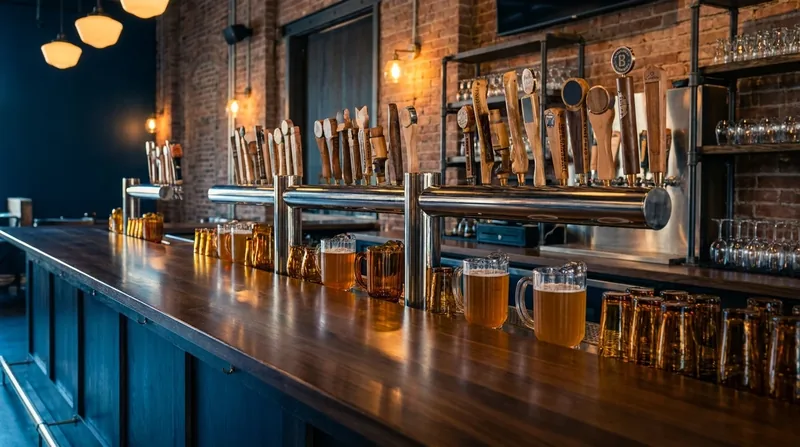
How to Open a Bar, Tavern or Supper Club in Wisconsin
How to Open a Bar, Tavern or Supper Club in Wisconsin
If you want to open a Wisconsin bar, a neighborhood tavern or a supper club, the paperwork itself is manageable. The hard part is the liquor license. In most of Wisconsin, the license you need is a quota-limited Class B liquor license issued by your municipality, and many municipalities have no open licenses at any given time. Find that out before you sign a lease, because everything else in your plan depends on it. This guide puts the steps in the order that avoids expensive surprises: confirm the license, form the business, register for taxes, meet the operator and food rules, then build and open.
This is informational content, not legal or tax advice. Liquor licensing, zoning and entity choice depend on your municipality and your specific facts. Talk with a Wisconsin attorney and a CPA before you commit to a lease, a purchase or a tax structure.
Materials and documents to gather first
You will not need every item on day one, but having them ready keeps the process moving.
- A shortlist of business names, each checked against the DFI business search
- A decision on entity type: limited liability company (LLC), corporation, or sole proprietorship or partnership
- A federal EIN and government-issued ID for every owner
- A Wisconsin registered agent with a physical street address and an email address
- The proposed property address and written confirmation from the owner that a tavern or restaurant use is allowed
- A floor plan with a seating count, since seating affects food and license decisions
- A draft menu and a food safety plan if you will serve food
- A list of planned drinks, including any to-go cocktails or wine
- A budget that covers license costs, the build-out, deposits, insurance and several months of operating cash
Step 1: Confirm a Class B liquor license is available
Wisconsin issues no general business license at the state or county level, so for a bar, tavern or supper club the approval that matters most comes from your municipal clerk. A Class B liquor license allows the sale of liquor by the drink, and you must also hold a Class B beer license. The municipality issues it and controls how many it will allow, so availability varies from one city or village to the next.
Contact the clerk before you do anything else and ask:
- Is a Class B liquor license available for this address or this part of the municipality?
- Is there a waiting list, and how long does the process take?
- Is an existing license for sale or transfer, and what does a transfer require?
- Is a reserve license offered, and what are its initial and annual fees?
- Do zoning and occupancy approvals need to come before or after the license?
- Which operator credential is accepted here?
Get answers in writing whenever you can. A verbal yes at the counter is not the same as an issued license.
Reserve licenses and the quota cost
When a municipality has reached its quota and no license is open, some offer reserve licenses. Expect a $10,000 minimum initial fee on top of the annual fee, which ranges from $50 to $500. Confirm the exact figures with the clerk. Budget for the initial fee before you commit to a site.
Above-quota exceptions
Some applicants can receive a license above the quota. The exceptions include:
- A restaurant seating 300 or more people
- A hotel with 50 or more rooms that also has either a 150-seat restaurant or a 400-person banquet room
If your concept does not fit one of these, do not assume an exception will apply. Ask the clerk whether any other exception covers your plan.
Step 2: Choose your format: bar, tavern or supper club
These names are used loosely, but they shape your license, kitchen and hours. A bar typically sells drinks with little or no food. A tavern is usually a drink-focused neighborhood business that may run a simple kitchen. A supper club is the Wisconsin format built around a full dining room, with a Friday fish fry as the signature weekly event. Tell the clerk which format you plan to run, because food licensing and building requirements change with it.
Step 3: Form your business entity with DFI
Business entities in Wisconsin are filed with the Department of Financial Institutions (DFI), Division of Corporate and Consumer Services, not a Secretary of State. You can file online through DFI's Business Entity File Online page, and you can search existing names through the DFI corporate records search. The core state charges are below.
| Item | Cost | Notes |
|---|---|---|
| LLC filing (Articles of Organization, Form 502) | $130 online, $170 paper | Filed with DFI |
| Corporation filing (Articles of Incorporation, Form 2) | $100 | Filed with DFI |
| Name reservation | $15 | Holds a name for 120 days |
| Annual report, LLC (Form 5) or corporation (Form 17) | $25 online, $40 by mail | Required each year; paper adds a $15 surcharge |
| Expedited service (optional) | $100 added to the filing fee | Acted on by close of business on the first business day after receipt |
| Statement of change of registered agent | $10 online, $25 on paper | Use when the agent or office changes |
| Trade name registration (optional) | $15 | Renewal is also $15 |
Name rules matter. An LLC name must include limited liability company, limited company, LLC or LC, or a variation that differs only in capitalization or punctuation. The name must also be distinguishable on DFI records. A preliminary search is only a guide, because availability is final only once DFI examines and files your document. Online filings are generally accepted on receipt, and DFI's statutory limit for processing new business filings is 5 business days.
Every LLC and corporation must maintain a Wisconsin registered agent with a registered office at a physical street address. A P.O. box, mailbox service or telephone answering service does not qualify. The agent's email address is required on the formation document and on every annual report, because DFI sends official notices to the agent. The entity cannot name itself as its own registered agent.
On taxes, Wisconsin has no separate LLC franchise or privilege tax. A multi-member LLC is generally taxed as a partnership and a single-member LLC as a disregarded entity by default, so profits flow through to the owners' Wisconsin individual income tax at graduated rates from 3.50% to 7.65%. An LLC that elects corporate treatment, or a corporation, pays the 7.9% corporate franchise or income tax, plus an economic development surcharge when gross receipts from all activities are $4 million or more. Which structure fits your bar is a question for your CPA.
Step 4: Register for state taxes
The Wisconsin One Stop Business Portal registers a new business with DFI, the Department of Revenue (DOR) and the Department of Workforce Development in one pass. Any seller of taxable products or services must hold a Seller's Permit, obtained through DOR's Business Tax Registration. The permit costs $20 for an initial two-year period and $10 to renew each subsequent two years.
The state sales tax rate is 5%, and local rates may add to it. A bar's sales can include food, beverages and merchandise that are taxed differently, so ask DOR which of your items are taxable before you set your menu prices and point-of-sale settings. DOR's new business page is the place to start.
Step 5: Put a qualified operator on premises
A licensee, an agent or a licensed operator must be on the premises whenever alcohol is sold. Wisconsin accepts two credentials for this role: a municipal operator license, or the statewide DAB operator's permit, which has been available since January 1, 2025. Confirm with your clerk which credential your municipality requires for your staff and how many people must hold one. Build that into your schedule from the first day, because an uncovered shift is a compliance problem even if the bar is busy.
Step 6: Get a retail food license if you serve food
If you serve food, you need a retail food license. It is issued by the Department of Agriculture, Trade and Consumer Protection (DATCP) or by a local health department acting as DATCP's agent, depending on where you are. Find out which one covers your location before you finalize the kitchen design. Supper clubs and Friday fish fry operations are food businesses first, so plan the hood, sinks, refrigeration, storage and food safety procedures with the licensing agency early, not after the equipment is installed. Confirm the fee and inspection process with the agency that covers your address.
Step 7: Clear zoning, building and occupancy
Zoning, building permits and occupancy approvals are handled by your municipality, not the state. Ask whether a tavern or supper club use is permitted in your zoning district, or whether it needs a conditional use permit. Trades that do the build-out, such as plumbing or electrical work, may require credentials issued by the Department of Safety and Professional Services (DSPS). Confirm which DSPS credentials apply to your contractors. Do not sign a long-term lease until zoning and the liquor license path are both confirmed in writing.
Step 8: Set the rules for to-go drinks
If you plan to sell to-go cocktails or wine by the glass, they must go out in tamper-evident sealed containers. Build that into your packaging, your staff training and your point-of-sale process. Confirm the current rules for your license class with the clerk and the state before you advertise the service.
Step 9: Open, then keep your filings current
Opening day is the start of a recurring compliance calendar, not the end of the project. Plan for:
- The DFI annual report for your LLC or corporation, due each year during the calendar quarter containing your anniversary of organization: March 31, June 30, September 30 or December 31
- Sales tax filings with DOR under your Seller's Permit
- Annual liquor license renewal with your municipality
- Operator credential renewals for every person who covers a shift
- Food license renewals and inspections
A missed annual report can put an entity in a bad standing position with DFI, so put the due dates on a shared calendar from the day you form the business.
Tips that save time and money
- Ask the clerk first. Confirm license availability before you negotiate a lease or sign a purchase agreement.
- Use the entity name on the application only after the filing is accepted. Ask the clerk whether they want the DFI filing number or the stamped articles with the application.
- Budget for the reserve fee. If a reserve license is your only path, the $10,000 minimum initial fee belongs in your opening capital plan.
- Draft your menu and kitchen plan together. A supper club's food program drives the food license, equipment and staffing.
- Reserve time with the Wisconsin SBDC. The Wisconsin Small Business Development Center Network offers free advising for owners at early planning stages.
Common mistakes to avoid
- Signing a lease before confirming the license. A site with no available license can leave you paying rent on a building you cannot open.
- Assuming a name is available because it looked open online. Availability is final only when DFI files the document.
- Using a P.O. box as the registered office. The office must be a physical street location in Wisconsin.
- Leaving the operator off the schedule. A licensee, agent or licensed operator must be on premises.
- Calling a supper club a bar in your plans. The food license, kitchen and staffing requirements are different, and the clerk and food agency will treat them differently.
- Missing the annual report. DFI requires it every year, and paper filings cost more.
- Selling to-go drinks without sealed containers. Packaging must meet the tamper-evident rule before the first sale.
Expected results
A well-organized opening plan may help you avoid the most common delays: a license that never becomes available, a food inspection that requires a costly kitchen change, or a shift with no qualified operator on premises. Results depend on your municipality, your concept and how quickly each agency responds. Owners who confirm the license, zoning and food path before they commit money are generally in a better position than owners who discover those rules after signing. No guaranteed timeline or revenue outcome can be promised from the steps above, so use them as a planning checklist rather than a forecast.
Official resources and next steps
- DFI Business Entities: General Information
- Wisconsin Department of Revenue: New Business
- Wisconsin One Stop Business Portal
- SBA Wisconsin District Office
Liquor licensing, operator rules, food licensing and zoning all run through your municipal clerk or the state agency that covers your address, and fees and processing times change. Confirm every figure in this guide on the agency page before you act. For a Class B application, a reserve license or any project with a building build-out, consult a Wisconsin attorney and a CPA before you sign.
Keep exploring: related Wisconsin guides
- How to Start a Winery or Distillery in Wisconsin
- How to Open a Restaurant in Wisconsin
- How to Start a Food Truck in Wisconsin
- Selling at Wisconsin Farmers Markets
- Wisconsin Liquor License
- How to Start an LLC in Wisconsin
- Wisconsin Business License
- How Much Does It Cost to Start a Business in Wisconsin
- All Wisconsin business types
- Every Wisconsin guide in one place