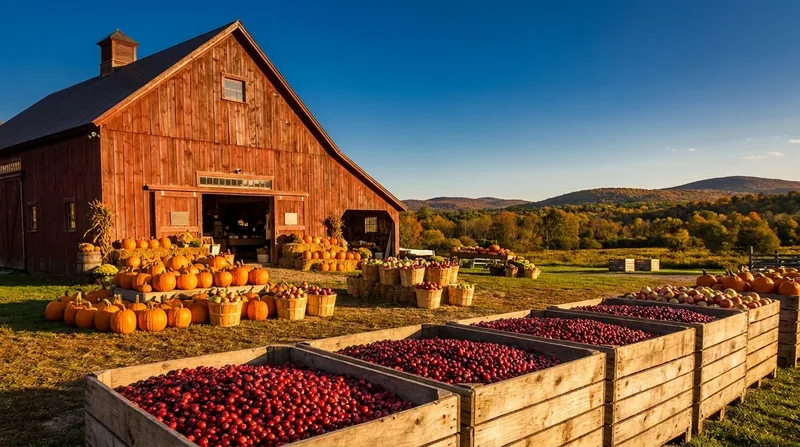
Selling at Wisconsin Farmers Markets: Which Foods Need a License
Selling at Wisconsin Farmers Markets: Which Foods Need a License
Most vendors at a Wisconsin farmers market never need a state food license. Fresh whole produce, for example, needs no license at all. The requirements start when a product is processed, baked, canned, or made from animals, and each of those can trigger a different rule. This guide sorts common market foods into the categories that matter, lists the paperwork each one needs, and gives you the order to do it in. It answers the questions most first-time vendors ask about the wisconsin farmers market license, the state seller's permit, the rules for wisconsin honey and wisconsin maple syrup, and the wisconsin egg license for small flocks.
This article is informational content, not legal or tax advice. Rules change, and market sponsors and cities can add requirements on top of state rules. Check the agency pages listed at the end before you pay for a booth.
Quick Answer: Which Foods Need What
Use this table as a starting point, then confirm your specific product with the agency named in the last column.
| Product | What it generally needs | Confirm with |
|---|---|---|
| Whole, fresh produce (vegetables, fruit, whole herbs) | No state license | Your city clerk and market sponsor for booth rules |
| Your own honey, cider or maple syrup, with no other processing | Exempt from ATCP 75 licensing | DATCP |
| Home-baked goods | Must fit within the cottage food rules | DATCP |
| Home-canned goods | Pickle Bill exemption: total sales under $5,000 per year, with required signage | DATCP |
| Eggs from a flock of 150 or fewer hens | Free DATCP registration and a retail food license to sell at markets | DATCP or your local health department |
| Eggs from a larger flock | A processing license, so confirm the category before you expand | DATCP |
| Meat and dairy | DATCP license | DATCP |
| Any taxable sale, including prepared food | Seller's permit from the Department of Revenue | Department of Revenue |
What to Gather Before You Apply
Pull these items together before you file anything. Most are one-time tasks, and having them ready keeps the process from stalling at the first form.
- A complete product list. For each item, write every ingredient and every processing step. Note whether you grow, raise, harvest, bake, cook or bottle it yourself.
- A source list. Name the farm, apiary, orchard or flock each product came from, and say whether you buy any ingredients or product from another producer.
- Your legal name and mailing address, plus a business name if you plan to sell under one.
- The identifying numbers the Department of Revenue asks for on its registration form. Have these ready before you start the online application.
- Final labels or sample packaging for every product. Agencies and market managers review what the customer sees, so bring the final versions, not drafts.
- Your flock size, if you plan to sell eggs, counted on the date you apply.
- The market's vendor packet. Get it from the market sponsor or the municipal clerk, and note its deadlines.
Expect to pay several separate fees. Some are listed in this article. Where a fee is not listed, confirm it on the agency page before you budget for it.
Step-by-Step: Getting Your Market Setup Right
Step 1: Sort every product into one category
Write each product on its own line and place it in one of four groups: whole produce, your own honey, maple syrup or cider, processed or baked food, or animal products such as eggs, meat and dairy. Some products sit in more than one group. Flavored honey, cider with added spices and cut produce mixes all need a closer look. The most common reason a product that was exempt stops being exempt is a change in how it is made, such as adding an ingredient or cooking it further.
Step 2: Start with the products that need no license
Whole, fresh produce needs no state license to sell. Vegetables, fruit and whole herbs sold as they came off your land can go on the table with only the market's vendor permit. Once you cut, bag, mix or cook produce, it is a processed food, so move it to the processed category and follow the steps that apply to it.
Step 3: Confirm the honey, maple syrup and cider exemption
Wisconsin exempts sellers of their own honey, cider or maple syrup from ATCP 75 licensing when they do no other processing. The exemption is written around your own product. Buying honey or syrup from another producer and reselling it does not fall under it. Adding flavors or infusions, blending your product with someone else's, or making value-added items such as maple candy or honey-based sauces takes the product out of the exemption. Describe each new product to DATCP before you sell it.
Step 4: Check whether your baked goods fit the cottage food rules
Wisconsin's cottage food rulings let home bakers sell shelf-stable baked goods made in a home kitchen without a license and with no sales cap. Unbaked goods such as candy and fudge are not covered. Many breads, cookies and similar baked goods are the typical examples, but coverage depends on the specific product, its ingredients and how it is labeled. A filling, frosting or dairy ingredient can change the answer, so check each recipe rather than assuming a baked good is covered because another vendor sells it. Ask DATCP to confirm the scope before you sell.
Step 5: Use the Pickle Bill exemption for canned goods only if you stay under the limit
Home-canned goods, such as pickles, jams and sauces, can be sold under Wisconsin's Pickle Bill exemption when total annual sales of those goods stay under $5,000 per year. The exemption also requires a sign at the point of sale. Keep a running sales total from the first sale of the year, because a single good market season can push you past the limit. Confirm the exact sign requirement and which products count as canned goods with DATCP. If your sales are approaching $5,000, stop assuming the exemption applies and ask DATCP what licensing you would need next.
Step 6: Register your egg operation and get a retail food license
This is the step most vendors miss. A flock of 150 or fewer hens skips the processing license, but you still need free registration with DATCP and a retail food license to sell eggs at a market. The retail food license can come from DATCP or from a local health department acting as DATCP's agent. Register and get the license before your first sale. Selling eggs without them is the fastest way to end up with a booth shut down on market day. If you plan to grow the flock past 150 hens, confirm the processing license requirement before you add birds, not after.
Step 7: Confirm meat and dairy licensing before you bring them
Meat and dairy products need DATCP licenses. Do not bring these products to market until your license is issued, and ask DATCP which license applies to your specific product, such as fresh cheese, cured meat or cut poultry. These licenses take longer to obtain than the other steps, so plan for the lead time.
Step 8: Register for a Wisconsin seller's permit
Wisconsin has no general statewide business license, but any seller of taxable products or services must hold a seller's permit. Register through the Department of Revenue's Business Tax Registration at https://tap.revenue.wi.gov/BTR/. The permit costs $20 for an initial two-year period and $10 to renew each subsequent two years. Wisconsin's state sales tax rate is 5%.
Ask the Department of Revenue which of your products are taxable. Prepared food is taxable, so a ready-to-eat item such as a hot dish, a sandwich or a cup of cider sold for immediate drinking may be taxable even when a bag of whole carrots is not. Do not assume a product is exempt because it is sold at a market.
Step 9: Decide on your business name and whether you need a filing
Many small vendors sell under their own name and need no state entity filing. If you sell under a different name, such as a farm name, you can register it as a trade name with the Department of Financial Institutions (DFI) for $15 per trade name or trademark. Trade name registration is optional, and you do not have to register to use a trade name. Sole proprietors and partnerships may also record a firm name with the county register of deeds under Wis. Stat. 134.17, at a fee set by the county.
If you want a limited liability company instead, DFI's filing fee is $130 for the Articles of Organization, Form 502. Business entities are filed with DFI, not the Secretary of State. An LLC must also file an annual report, which costs $25 and is due each year in the calendar quarter that contains the anniversary of its organization. Online filings are generally accepted on receipt, and DFI's statutory limit for processing new business filings is 5 business days. You can also register with DFI, the Department of Revenue and the Department of Workforce Development in one pass through the Wisconsin One Stop Business Portal at https://onestop.wi.gov.
Step 10: Apply for the municipal market vendor permit
Vendor permits come from the municipality or the market's sponsor, and the fees, rules and deadlines are set locally. Because they vary from city to city, confirm the amount and the application process with the city clerk or market manager. Ask for the insurance requirement, booth size rules, any limits on resale and whether the market requires you to grow or make what you sell. Submit the application before the market's deadline, not on the morning you plan to set up.
Step 11: Check your city's licensing and zoning
Most Wisconsin cities do not issue a general business license, but a few do. Lake Geneva is one example. Check your city's ordinances and the clerk's list of licensed activities. Alcohol and some other listed activities are licensed through the municipal clerk. If you bake, can or process at home, also check local zoning and home-occupation rules, since those can apply even when the state exemption does not.
Step 12: Label and display your products to the rules
Each packaged product should carry the information the agency requires for its category, which typically includes the product name, ingredients, net weight and your name and address. Honey and maple syrup labels should describe the food accurately and stick to plain facts about it. Confirm the label rules for each product category with DATCP before you print. If a product is canned, make sure the Pickle Bill sign is displayed where customers can read it.
Step 13: Keep records from the first sale
Track sales by product and by date. The Pickle Bill threshold, the sales tax you collect and your egg flock count all depend on records you keep during the season. Good records also make it easier to answer questions from an inspector, the Department of Revenue or a market manager.
Wisconsin Honey Laws: What the Exemption Covers
Wisconsin honey laws are simple in principle. Honey from your own hives, sold with no other processing, is exempt from ATCP 75 licensing. In practice, vendors run into trouble in three places:
- Reselling honey you bought. The exemption covers your own honey. Honey you purchased from another beekeeper and resold is outside it.
- Flavored or infused honey. Adding cinnamon, herbs, chili or other ingredients is processing, so confirm the product with DATCP before you sell it.
- Honey creams, whipped honey and other value-added products. Treat each one as a new product that needs its own review.
Keep a simple file showing where each batch came from. If a market or inspector asks, you can answer with records rather than memory.
Wisconsin Maple Syrup Laws: Same Rule, Different Traps
Wisconsin maple syrup laws follow the same logic as honey. Syrup made from your own trees, with no other processing, is exempt from ATCP 75 licensing. Vendors most often run into these problems:
- Bulk syrup from another producer. If you bottle or resell syrup you did not make from your own sap, the exemption does not apply.
- Maple candy, cream, sugar and blends. Cooking syrup further or mixing it with other ingredients creates a new product. Confirm each one with DATCP before you sell it.
- Mixed-source sales at a shared booth. If you sell with a partner, make sure each product's source is clear and that each seller's exemption is documented.
Wisconsin Farmers Market Rules: What Markets Usually Ask For
Market rules come from the market sponsor and the municipality, and they can be stricter than state law. Expect most markets to ask for a completed vendor application, proof of your seller's permit, a product list, the vendor permit and insurance information, and your booth fee. Some markets also limit resale, require that vendors grow or make what they sell, or set rules about signage and product samples. Read the rules before you apply. A product that is legal under state law can still be banned from a particular market.
Common Mistakes to Avoid
- Assuming everything from your farm is exempt. Only your own honey, cider and maple syrup with no other processing fall under that exemption. Cut produce and baked goods do not.
- Adding an ingredient to an exempt product without checking. Flavors, infusions and blends change the category.
- Selling eggs before registration and licensing. Free DATCP registration and the retail food license must be in place first.
- Passing $5,000 in canned goods sales without a plan. Track the total, and confirm the signage every season.
- Skipping the seller's permit because it is a small market. Any taxable sale requires the permit, regardless of market size.
- Treating prepared food as untaxable. Ready-to-eat items are often taxable, so ask the Department of Revenue.
- Making health claims on signs or labels. Statements such as honey or maple syrup treats or prevents a condition are not supported by the FDA, and they invite enforcement. Describe the food, not medical benefits.
- Applying for the vendor permit at the last minute. Municipal and market deadlines are firm, and a late application can cost you the season's first markets.
Expected Results
If you complete these steps in order, you may be able to sell most of your products legally at a Wisconsin farmers market within a few weeks, provided your products are standard and your registrations are approved promptly. Products that need DATCP licenses, such as meat and dairy, or new products that need a determination from DATCP, can take longer. Outcomes depend on your products, the agency's review and the market's rules, so no result is guaranteed. Plan for a timeline that leaves room for a review, and do not promise customers a product before its approval is in hand.
Tips for a Smoother First Season
- Start with the simplest products. Whole produce and your own honey, cider or maple syrup with no other processing are the easiest to launch. Add baked goods, canned goods and eggs once their paperwork is complete.
- Write a one-page product sheet. List each product, its ingredients, its source and its category. Agencies and market managers respond faster to a clear sheet.
- Call before you buy equipment. A canning setup, egg washing station or commercial kitchen can cost more than the licensing itself. Confirm what you need first.
- Use local advisors. The Wisconsin Small Business Development Center Network, through the Universities of Wisconsin, can help you review your plan. The SBA's Wisconsin district office also publishes resources for small businesses.
- Keep a folder for each season. Store your permits, registrations, sales records and market correspondence together.
Official Resources
- Wisconsin Department of Financial Institutions, business entities: https://dfi.wi.gov/Pages/BusinessServices/BusinessEntities/GeneralInformation.aspx
- DFI trade name fees: https://dfi.wi.gov/Pages/BusinessServices/Trademarks/Fees.aspx
- Wisconsin Department of Revenue, new business: https://www.revenue.wi.gov/Pages/Businesses/New-Business-home.aspx
- Seller's permit registration, Business Tax Registration: https://tap.revenue.wi.gov/BTR/
- Wisconsin One Stop Business Portal: https://onestop.wi.gov
- Wisconsin Small Business Development Center Network: https://wisconsinsbdc.org/
- U.S. Small Business Administration, Wisconsin: https://www.sba.gov/district/wisconsin
- Department of Agriculture, Trade and Consumer Protection (DATCP): confirm the current contact and licensing pages through the state's website before you apply.
Disclaimer: This article is informational content, not legal or tax advice. Fees, thresholds and rules can change, and local markets can impose their own requirements. Confirm each requirement with the named agency before you sell. For complex situations, such as multiple product categories, a growing flock, or a business that plans to sell across state lines, consult a qualified Wisconsin attorney or CPA.
Keep exploring: related Wisconsin guides
- How to Open a Restaurant in Wisconsin
- How to Open a Bar, Tavern or Supper Club in Wisconsin
- How to Start a Bakery Business in Wisconsin
- How to Start a Winery or Distillery in Wisconsin
- Wisconsin Liquor License
- How to Start an LLC in Wisconsin
- Wisconsin Business License
- How Much Does It Cost to Start a Business in Wisconsin
- All Wisconsin business types
- Every Wisconsin guide in one place