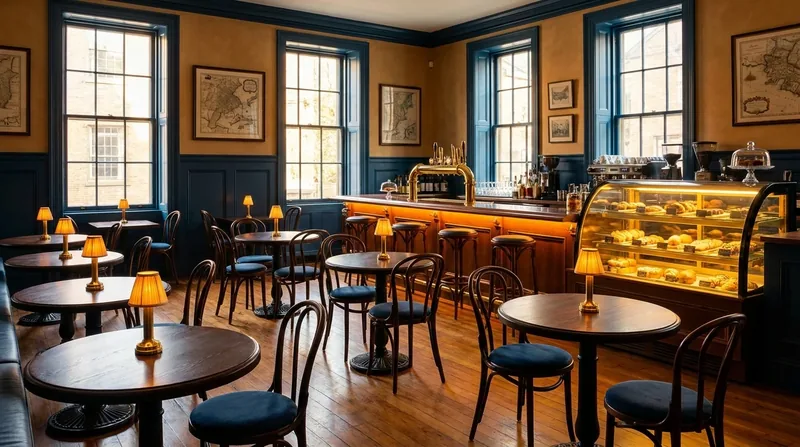
How to Open a Restaurant in Wisconsin: Retail Food License and Food Manager Rules
How to Open a Restaurant in Wisconsin: Retail Food License and Food Manager Rules
If you want to open a restaurant in Wisconsin, the central permit is the retail food establishment license. Wisconsin does not issue one general statewide business license, so a restaurant is set up through several separate channels: a business entity filed with the Department of Financial Institutions (DFI), a seller's permit from the Department of Revenue (DOR), a food license from the Department of Agriculture, Trade and Consumer Protection (DATCP) or the local health department acting as its agent, and, if you plan to sell alcohol, a license from your municipal clerk. This guide walks through those pieces in the order most new owners need them, with the most attention on the food license and the certified food protection manager rule.
The food rules come from ATCP 75 and the Wisconsin Food Code, effective 10/25/2020. Your local health department or DATCP applies those rules to your plans, your equipment, and your daily operation.
What You Need Before You Start
Gather these items before you file anything. A missing item usually stalls the process at the plan review stage.
- A business name you have checked in the DFI corporate records database, plus a decision on whether you will file as an LLC or a corporation.
- A signed lease, purchase agreement, or letter of intent for the site, and written confirmation that the location is zoned for food service.
- A floor plan drawn to scale showing seating, kitchen layout, sinks, food storage, the dish area, restrooms, and mechanical equipment.
- An equipment list with specification sheets for every cooking, refrigeration, and warewashing unit.
- A draft menu. Flag any specialized processes, such as curing, fermenting, or vacuum packaging, because these can add review steps.
- Your registered agent's name, a Wisconsin street address, and an email address. Wisconsin requires a physical registered office, not a P.O. Box.
- Your federal Employer Identification Number (EIN), if you have one, for the entity and tax filings.
- A budget line for the food license fee, which depends on a point score (see Step 5), the plan review, and the certified food protection manager exam.
Step-by-Step: Getting a Wisconsin Restaurant License
Step 1: Confirm your local health authority and zoning first
Before you sign anything, find out who inspects food businesses in your city or town. In some places DATCP issues the license directly. In many others, a local health department acts as DATCP's agent and handles the license, plan review, and inspections. Ask the municipal clerk and the zoning office whether your address allows food service and whether a conditional use permit or building permit is needed. Signing a lease before this check is one of the costliest mistakes in the process, because a site that cannot be licensed for food service is difficult to recover from.
Step 2: Form your business entity with DFI
Business entities in Wisconsin are filed with the Department of Financial Institutions, not a Secretary of State. An LLC files Articles of Organization (Form 502) for a $130 filing fee. A stock corporation files Articles of Incorporation (Form 2) for $100. Both can be filed through DFI's Business Entity File Online system. An LLC owes a $25 annual report each year after its year of organization, or $40 if filed on paper. Optional expedited service costs $100 on top of the filing fee. You can reserve a name for 120 days for $15. Every entity must maintain a registered agent with a Wisconsin physical office, and the entity cannot name itself as its own agent. Read the DFI general information page before you choose a structure, and talk with an attorney or CPA about liability, ownership, and tax treatment.
Step 3: Register for a seller's permit with DOR
Any seller of taxable products or services must hold a seller's permit from the Department of Revenue. Meals served at a restaurant are generally subject to the 5% state sales tax, so you need the permit before your first sale. The initial permit costs $20 for two years, and renewal costs $10 every two years. You can register through the Wisconsin One Stop Business Portal, which registers a new business with DFI, DOR, and the Department of Workforce Development in one pass, or through DOR's Business Tax Registration system. Ask DOR how it treats catering, packaged retail sales, and any other revenue streams you plan to add, since not every sale is taxed the same way.
Step 4: Submit plans for plan review before you build or remodel
Plan review is the step most owners underestimate. Submit your floor plan, equipment list, finish schedule, plumbing layout, and menu to the agency that will license you, before you buy equipment or start construction. The reviewer checks whether the layout meets the Food Code for sinks, cooking and cooling equipment, refrigeration, surface materials, and waste handling. If the kitchen is changed after review without approval, the pre-licensing inspection can fail. Ask whether plan review carries its own fee, separate from the license fee, and confirm the current amount with the agency. Schedule plan review with room for revisions, and ask the reviewer for written comments so you can track each change.
Step 5: Apply for the retail food establishment license
The retail food establishment license is issued under ATCP 75 by DATCP or your local agent health department. Its fee is set by a point score rather than one flat amount. The score reflects the complexity and risk of your operation. Ask the agency for its current fee schedule and how your concept would score before you finalize your budget. Confirm the exact amount on the agency's page or with its staff.
Step 6: Pass the pre-licensing inspection
A food establishment must be inspected before it opens. The inspector compares the building with your approved plans, checks sinks, hand washing stations, refrigeration, pest control, and food storage, and reviews your food safety procedures. Have the kitchen fully installed and running, with equipment powered on and temperature logs in place. Keep a list of your staff's food safety training ready. If the inspector finds violations, correct them and request a reinspection. Do not open to the public until the license is issued and the inspection is passed.
Step 7: Certify a Certified Food Protection Manager
Wisconsin requires a Certified Food Protection Manager (CFPM) at a retail food establishment, and that certification must be in place within 90 days of opening. The certification is valid for five years, after which the exam must be taken again. Prepackaged-only stores are exempt from this requirement. A restaurant that cooks, assembles, or portions food on site is unlikely to qualify for that exemption, so confirm the point with DATCP. Ask DATCP which exams and course providers it accepts before you enroll, and schedule the exam early so that your kitchen manager is certified before the first busy weeks of service. Many owners treat this as a late task, but the 90-day window is short once the doors open.
Step 8: Decide on alcohol early
An alcohol license is separate from the food license and comes from your municipal clerk. Class B liquor licenses are quota-limited, which means your municipality may cap how many it issues, and the available number may already be used. Ask the clerk about availability before you sign a lease, and follow whatever local application steps the clerk describes. Do not promise alcohol service in your lease or business plan until the license is confirmed.
Step 9: Check occupational and trade licensing
Some trades involved in building or running a restaurant are licensed separately by the Department of Safety and Professional Services (DSPS). Electrical, plumbing, and HVAC contractors may need current credentials, and you should confirm whether any on-site role requires a DSPS credential. Ask each contractor for proof of current licensing before work begins.
Common Mistakes to Avoid
- Signing a lease before confirming zoning and the local health authority. A site that cannot be licensed for food service leaves you paying rent with no way to open.
- Buying or installing equipment before plan review. Changes after installation are expensive, and they can delay the pre-licensing inspection.
- Assuming Wisconsin has a general business license. The core filings are the entity with DFI, the seller's permit with DOR, and the food license, with alcohol and trade credentials added as needed.
- Treating the CFPM as an afterthought. The certification must be in place within 90 days of opening, so schedule the exam before you hire your kitchen manager.
- Using a P.O. Box as the registered office. Wisconsin requires a physical street address for the registered agent.
- Assuming the prepackaged-only exemption fits your kitchen. A kitchen that cooks on site generally needs a CFPM.
- Forgetting the LLC annual report. The report is due in the calendar quarter that contains your anniversary of organization, and missing it creates a compliance problem with DFI.
- Opening before the license is issued. Advertising a soft opening or serving guests before the license and inspection are complete puts the whole project at risk.
Free Help and Where to Verify
The Wisconsin Small Business Development Center Network, run through the Universities of Wisconsin, offers free advising for new owners. The SBA's Wisconsin district page lists regional contacts. Use these resources to check your plan before you pay for design work or a lease deposit.
Expected Results and Timeline
Working through these steps in order may help you reach a legal opening with fewer surprises. Results vary by location, concept, and agency workload. DFI's statutory limit for processing new business filings is 5 business days, but processing times for the food license, plan review, and pre-licensing inspection are set by each agency. Ask each agency for its current processing time and build that into your lease start date. On food safety, a licensed, inspected, and certified kitchen is designed to support safe food handling, but no license can guarantee that every food served is free of risk.
Quick Reference: Agencies and Costs
| Requirement | Agency | Cost |
|---|---|---|
| LLC formation (Articles of Organization) | DFI | $130 |
| Corporation formation (Articles of Incorporation) | DFI | $100 |
| LLC annual report | DFI | $25 online, $40 by mail |
| Name reservation | DFI | $15 for 120 days |
| Seller's permit | DOR | $20 for the initial two years, $10 every two years to renew |
| Retail food establishment license | DATCP or local agent health department | Set by point score, confirm with agency |
| Certified Food Protection Manager | DATCP | Confirm accepted exams and fees with DATCP |
| Class B liquor license | Municipal clerk | Confirm with municipality, quota-limited |
This content is informational only and is not legal, tax, or financial advice. Wisconsin rules, fees, and agency practices change, so verify each requirement with the named agency before you commit money. For complex situations, including ownership structure, lease terms, liquor licensing, and multi-location plans, consult a qualified attorney or CPA.
Keep exploring: related Wisconsin guides
- How to Open a Bar, Tavern or Supper Club in Wisconsin
- Selling at Wisconsin Farmers Markets
- How to Start a Winery or Distillery in Wisconsin
- How to Start a Food Truck in Wisconsin
- Wisconsin Liquor License
- How to Start an LLC in Wisconsin
- Wisconsin Business License
- How Much Does It Cost to Start a Business in Wisconsin
- All Wisconsin business types
- Every Wisconsin guide in one place